
2026 BMW M2 CS First Drive Review: $108K and Acts Like It on Track
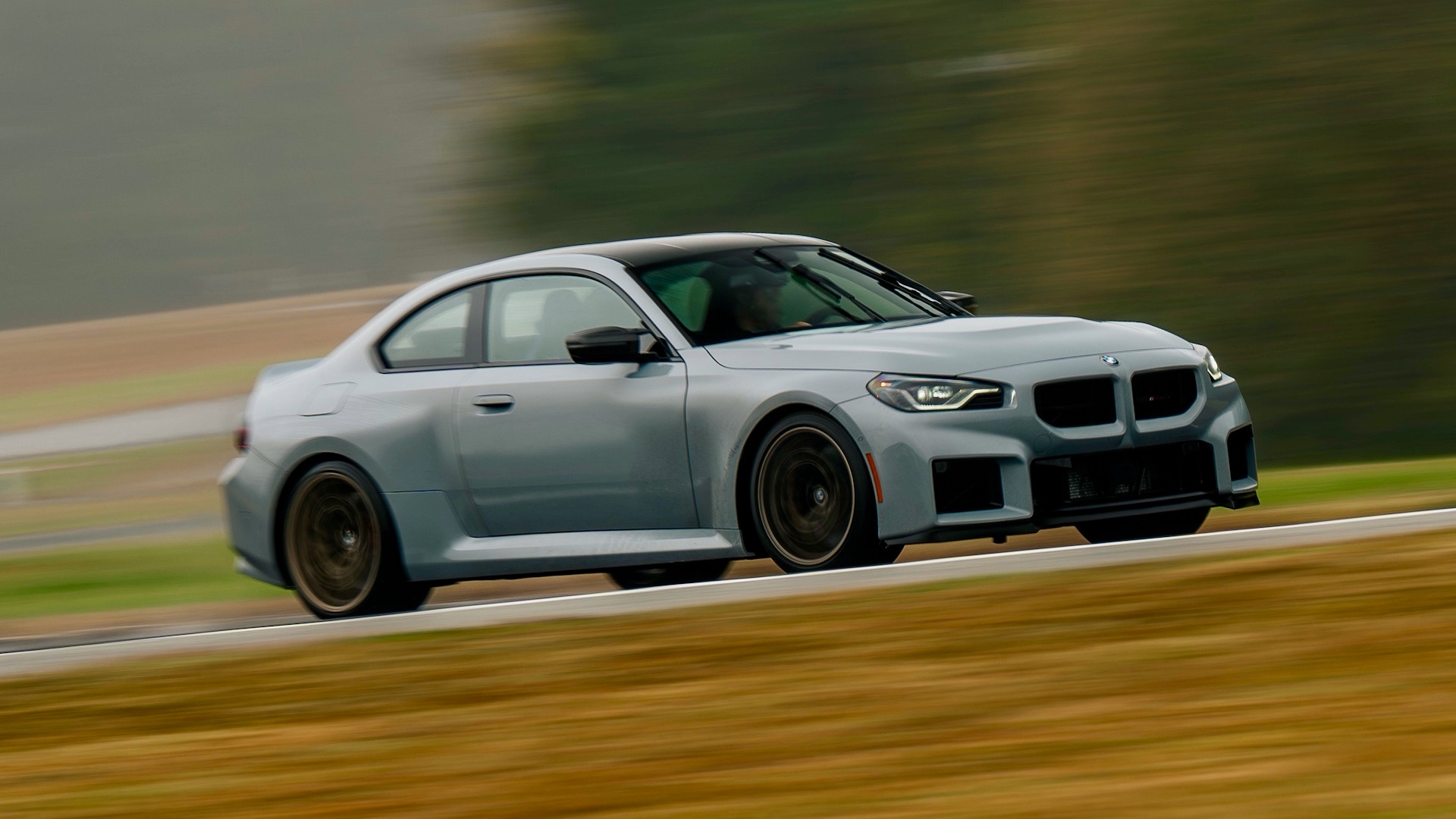
The shudder of tire shoulders on asphalt sounds a mild alert. I flick right and back left when I sense the rear end break away, and the drama dies out. The scuffing sounds give way to the snort of a turbo six and the squeak of a cold brake rotor waking up the pads. It may be dismal, gray, and rainy today, but drifting the 2026 BMW M2 CS around a sopping-wet track still is better than sitting at my desk drafting emails.
The M2 isn’t new. On the road since the 2024 model year in this generation, and preceded by a thrilling first generation, the latest M2 has earned its considerable street cred thanks to a 473-hp turbo inline-six and a choice of eight-speed automatic or six-speed manual transmissions, with rear-wheel drive. It’s the BMW most like those you might remember. The smallest and lightest of the bunch, it’s still the one with the steering and handling most attuned with BMW’s zingier, flingier past.
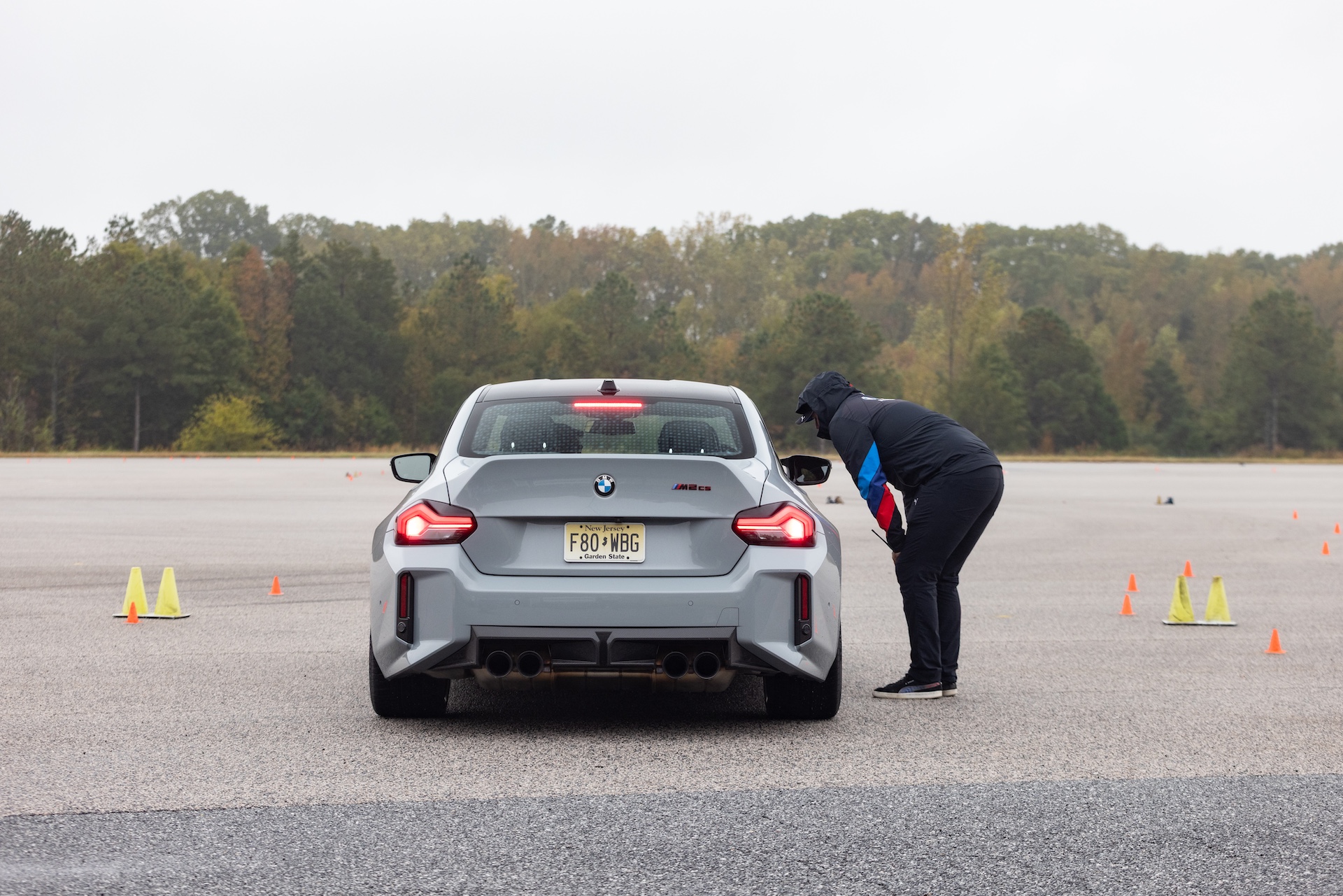

Now BMW has dealt us a CS edition. Up to 97 pounds lighter, with a chassis lowered by a third of an inch, its twin-turbo six also cranks out 50 horsepower more than the stock M2. Count it at 523 hp in all, which shuffles through an eight-speed automatic with paddle shifters to catapult the coupe to 60 mph in 3.7 seconds, on to a top speed of 188 mph. It’s a package that gets even lighter with available carbon-ceramic brakes that cut another 40 pounds.
A few visual cues distance it from the lesser M2. Black splitters in front and rear have thicker vanes. A carbon-fiber-plastic roof gets CFRP mirror caps as companions. The ducktail decklid also gets formed from the material, as do the cabin’s shift paddles, transmission tunnel, and seats. The killer touch: an LED-lit CS logo that glows and pulses from behind the door cards when you enter, along with LED CS logos in the seats at the headrest.


I slip in behind the wide span of LED gauges, tuck into the carbon-fiber seats, snick through the toggles and switches that command the car to lighten steering, tense up its shocks, or speed up its shifts, and program that into the M1 or M2 mode buttons in red on the steering wheel. Before I’m ready to rocket-ride on Michelin’s South Carolina test track, I take note of the red strip on the 12 o’clock position on the steering wheel. It centers me. For the moment, anyhow.
On an ad hoc autocross set up on a black lake, the M2 CS shows off its almost comically good handling. It whistles through the air like an axe thrown at a bullseye, its steady tire thrumble layered over the lazy roar of a powertrain barely tapped. BMW lets us warm up here, slipping through esses and carousels, and though the skies blur with the asphalt through a recurring mist, my enthusiasm’s undamped.
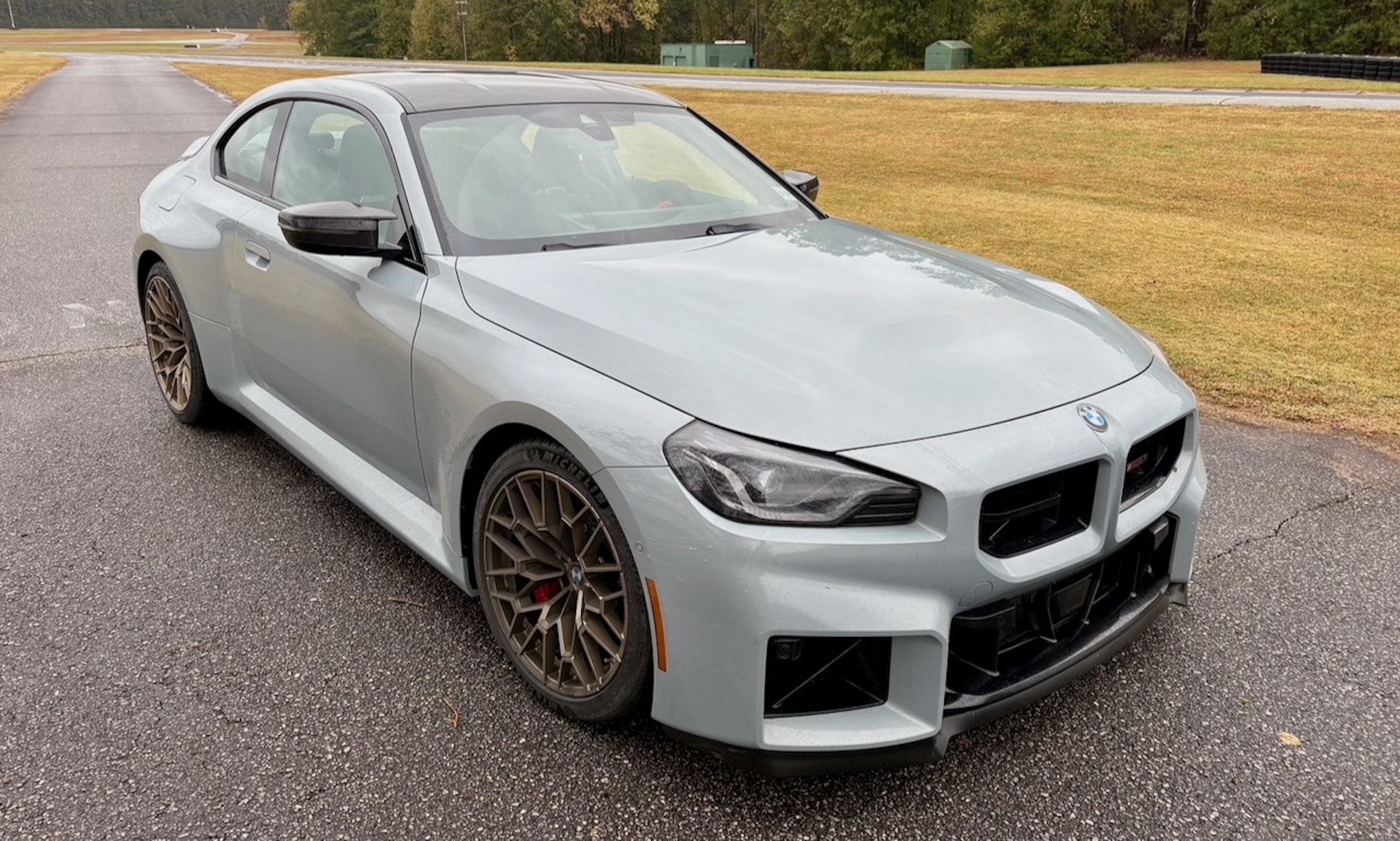

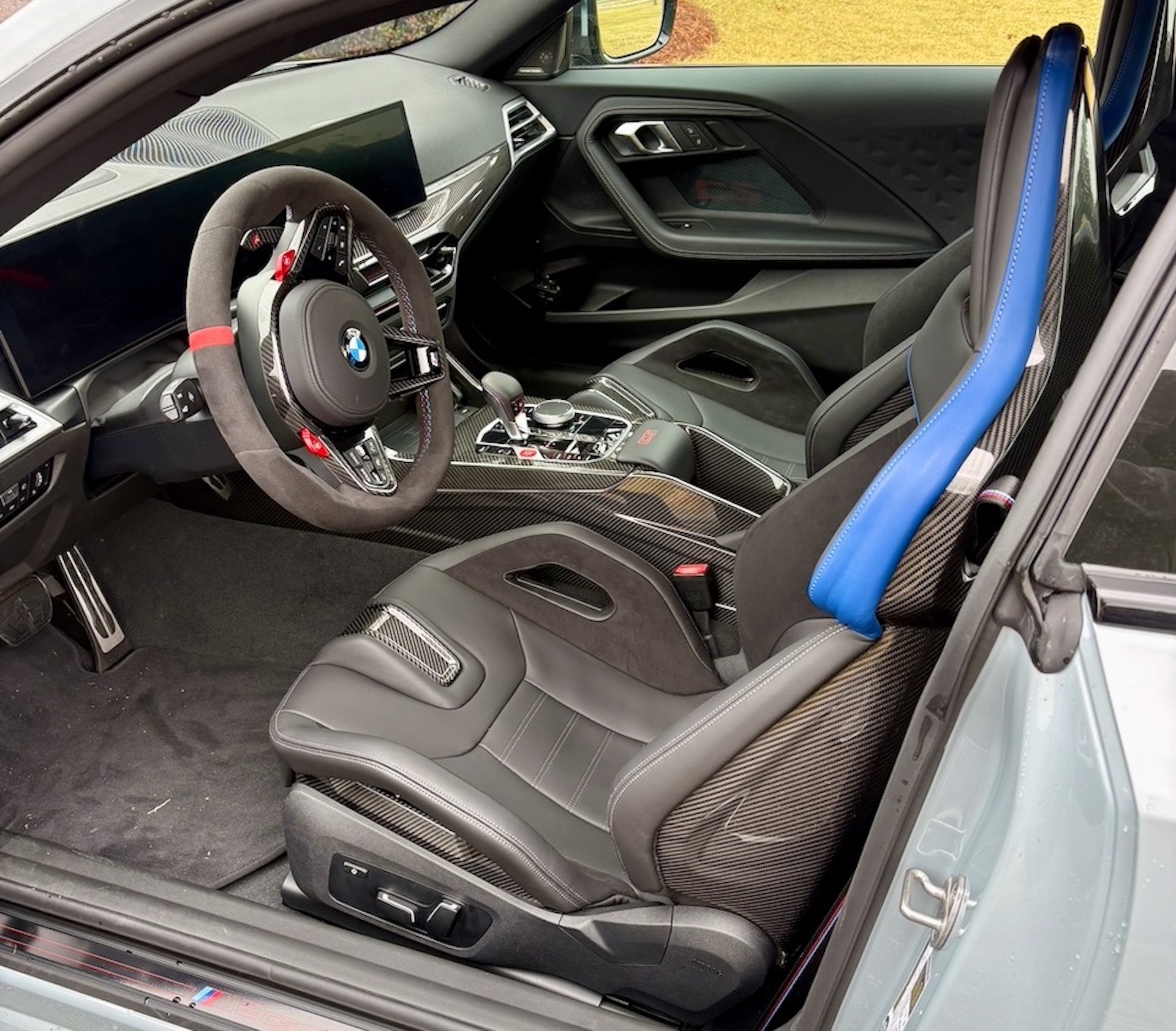
A brief country-road loop highlights an Achilles heel that doesn’t matter much in the balance. Through slaps of rain and wet leaves, all in comfort modes for shocks and steering, the M2 CS still drives like living in a rock tumbler. Hammering along in the lightest and most forgiving mode, it’s hard to imagine anything casual taking place within this footprint. It could use more lumbar support, sure, but it does have a switch that pinches the bottom bolsters to winch you deeply into the seat. I toggle its settings and flick the throttle, and the gauges light up in joy—blue for the left side, including the speedometer, right for the 7,200-rpm redline, a cluster divided.
For the last driving stint, I slide into position behind a lead driver who needles us around a high-speed loop. He booms past 100 mph in his all-wheel-drive M3, and I scrabble tires through puddles to keep up. The M2 CS’s ten-stage traction intervention system feels best to me at around four, where it cuts intervention but still promises to save my ass from humiliation. The M2 fusses and grumbles around the widest, fastest curves on its tires’ shoulders, wagging its tail and requiring correction, like a dog that knocks a bowl off a table. Four of us, three in CSs, slither through esses and hang on through a longer carousel turn, and it reminds me of the brilliant first-gen M2 I danced around north Georgia.


The CS doesn’t alter the M2’s winning formula at all. It just intensifies everything. Bigger, heavier, and stronger than an old twin-turbo Supra, it overpowers a Dark Horse Mustang and costs two-thirds the price of a 718 Cayman GT4. Few options get left behind once the CS box gets ticked: the eye-stinging price of $99,775 includes leather upholstery, Apple CarPlay and Android Auto, an M Sport differential, carbon-fiber trim including the roof panel, carbon-fiber front bucket seats, adaptive cruise control, wireless smartphone charging, Harman Kardon surround sound, a suede steering wheel, and a head-up display. Carbon-ceramic brakes add $8,500 to that.
Whether it’s a track-only toy parked at your curbside condo or the slingshot you aim at the Tail of the Dragon, the M2 CS grips and grabs at pavement with all its might. Despite all the rain that deluged my drive, my enthusiasm for BMW’s most delightful M car remains undamped.
BMW provided The Drive with travel, accommodations, and access to the vehicle for the purpose of writing this review.
| 2026 BMW M2 CS Specs | |
|---|---|
| Base Price (As Tested) | $99,775 ($108,275) |
| Powertrain | 3.0-liter turbo inline-6 | 8-speed automatic | rear-wheel drive |
| Horsepower | 523 @ 6,250 rpm |
| Torque | 479 lb-ft @ 2,750 to 5,730 rpm |
| Seating Capacity | 4 |
| Cargo Volume | 13.8 cubic feet |
| Curb Weight | 3,770 pounds |
| 0-60 mph | 3.7 seconds |
| Top Speed | 188 mph |
| EPA Fuel Economy | 16 mpg city | 23 highway | 19 combined |
| Score | 9/10 |

Quick Take
A brilliant upgrade with a finely honed handling edge, the M2 CS cuts to the chase like no other M machine.
Got a tip? Email us at tips@thedrive.com
The post 2026 BMW M2 CS First Drive Review: $108K and Acts Like It on Track appeared first on The Drive.
Posts Widget
- 1

- 2
- 3
- 4


Copyright © 2025 · ORUC GLOBAL · All rights reserved


