

You Don’t Want a Self-Driving Lawnmower. You Want a Mowbot
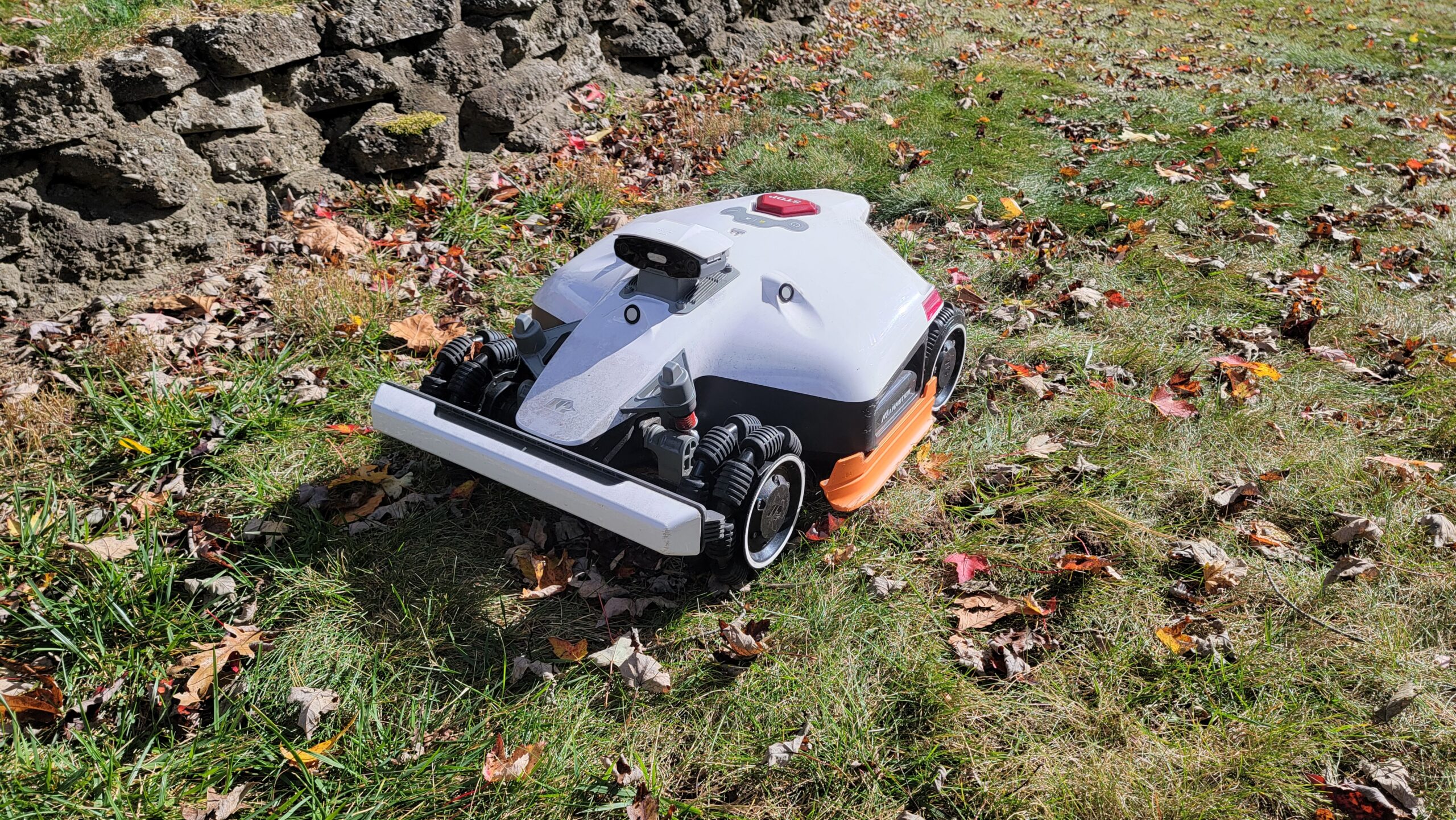
Sometimes, people take me for a Luddite. I’ve never bought an automatic car, let alone one that can drive itself. In fact, I’m really not a fan of “smart” technology in general. I’m happy to shift my own gears and, for that matter, flip my own light switches. And until recently, I was quite content mowing my own lawn. If you’d shown me Honda’s autonomous contraption three months ago, I would have laughed you out of my entire orbit. Today, I have my own autonomous lawn bot—or mowbot, as I like to call it. Life’s funny, innit?
So, what happened three months ago? Well, two things. For starters, I happened across a review of some lidar-enabled lawn bots. Given that it’s occasionally my job to write about self-driving tech, the notion sent me down a bit of a rabbit hole. After watching several comparisons of lawn bots with and without a lidar solution, I found myself growing increasingly impressed by their capabilities. I wasn’t in danger of spending my money, but for the first time, such a thing was on my proverbial scope.
That brings me to the second thing: My Ryobi broke. It was a simple 40V push mower—no self-propel or anything fancy like that. A piece of debris got under the battery shroud and into the receptacle while I was swapping batteries. When I inserted the new one, it broke one of the terminal pieces off completely. It was the cheapest 40V in Ryobi’s lineup when I bought it for the tiny, 1/8th-acre property I was renting in 2020. I did the frugality math; a Frankenstein fix could probably be done for about $50 with a little patience. I lack the latter, so I put the mower on the curb (Detroit’s scavenging culture is as strong as ever) and started pondering a replacement.
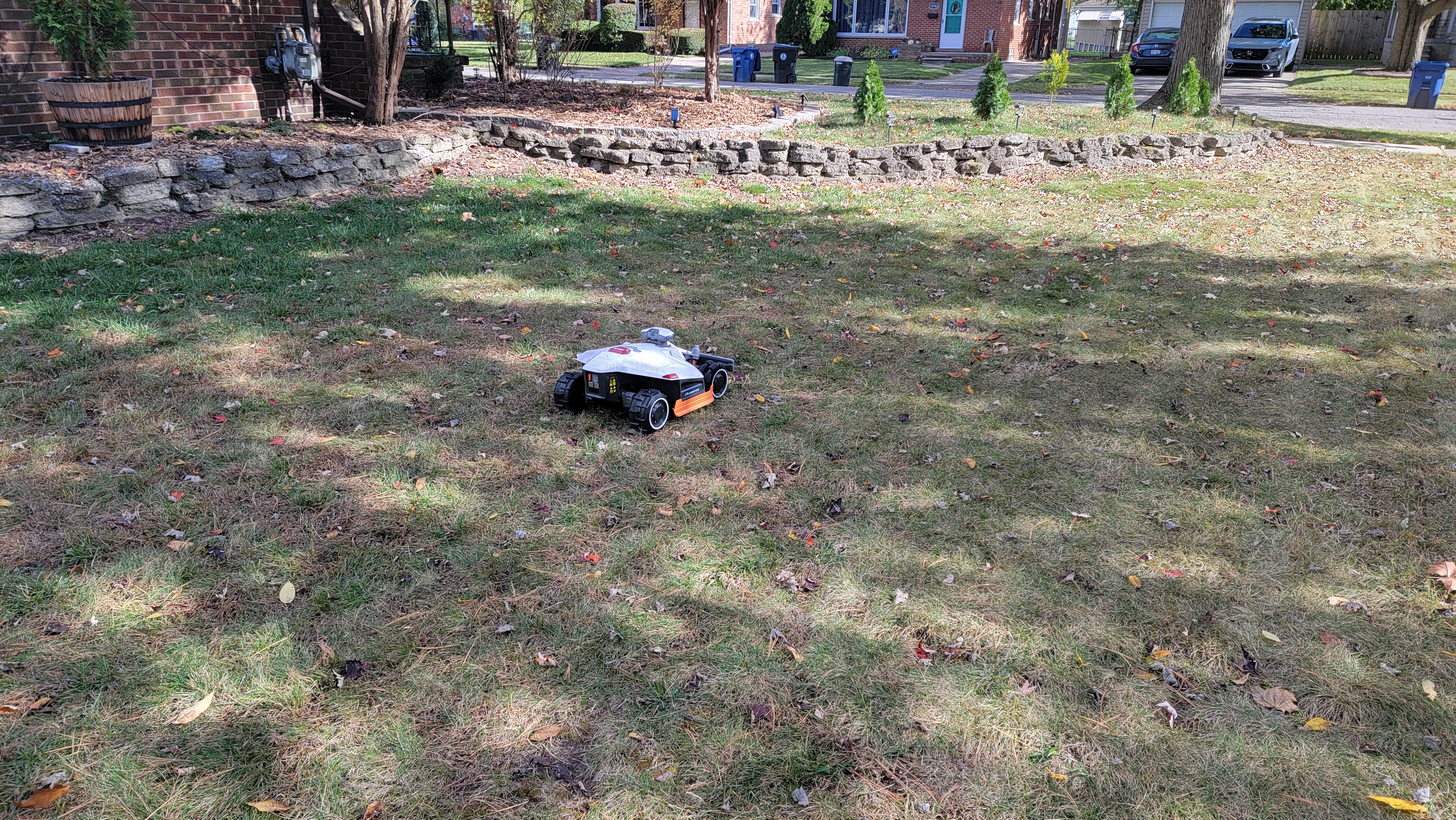
A couple hundred bucks would have gotten me the latest version of Ryobi’s basic push model (which still uses the same 40-volt batteries, handily enough) but three years ago I bought a house on just under half an acre. Where I could mow the old yard on my lunch break, the new place required a larger time commitment. I didn’t mind the effort; I’ve grown to appreciate the value of basic physical activity. But between rebuilding a neglected yard and the standard upkeep demands of a 95-year-old house, I find myself with less patience for spending hours walking back and forth every other weekend. This thought process first pushed me toward a zero-turn mower, but having rid myself of gas lawn equipment years ago, the thought of once again maintaining gasoline just for a single machine was a major turn-off. And electric zero-turns? Hoo boy, that’s a lotta money.
Somewhere in that stream of consciousness, I had my cat-with-a-newspaper meme moment: I should get a lawn robot.
A whole lot more research followed. Lawn bots come in three flavors, essentially. The most affordable ones follow a boundary set by a physical wire and act a lot like robot vacuums. Once you lay their boundaries, they’re generally free to figure out the rest. The more money you spend, the more control you get over their path, but you’re stuck with a piece of “smart” tech that can require finicky hand-holding, especially if you have pets (or pests) that might disrupt your electric fence. The better budget robots combine bump-style obstacle detection with a camera- or ultrasonic sensor-based system.
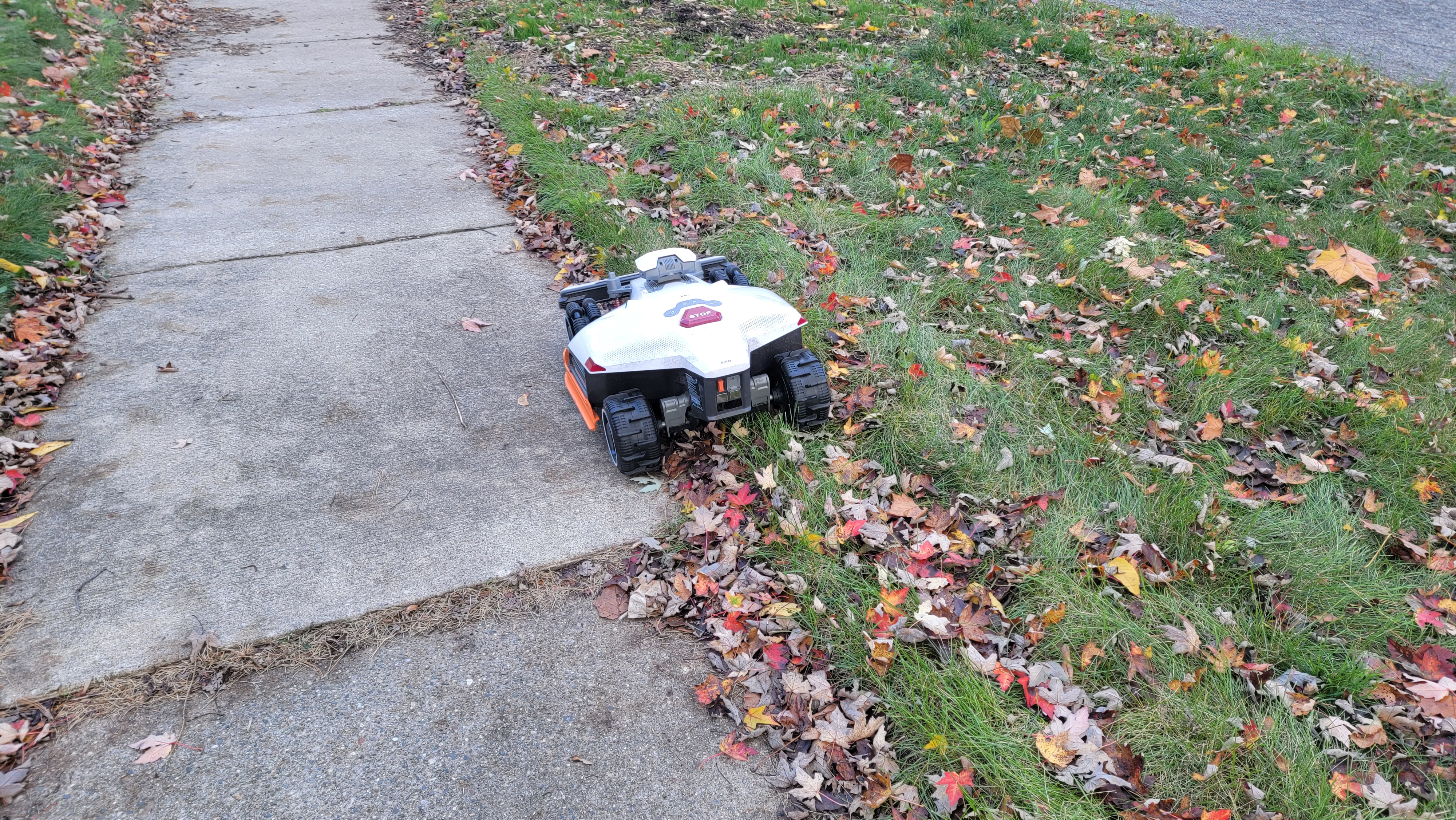
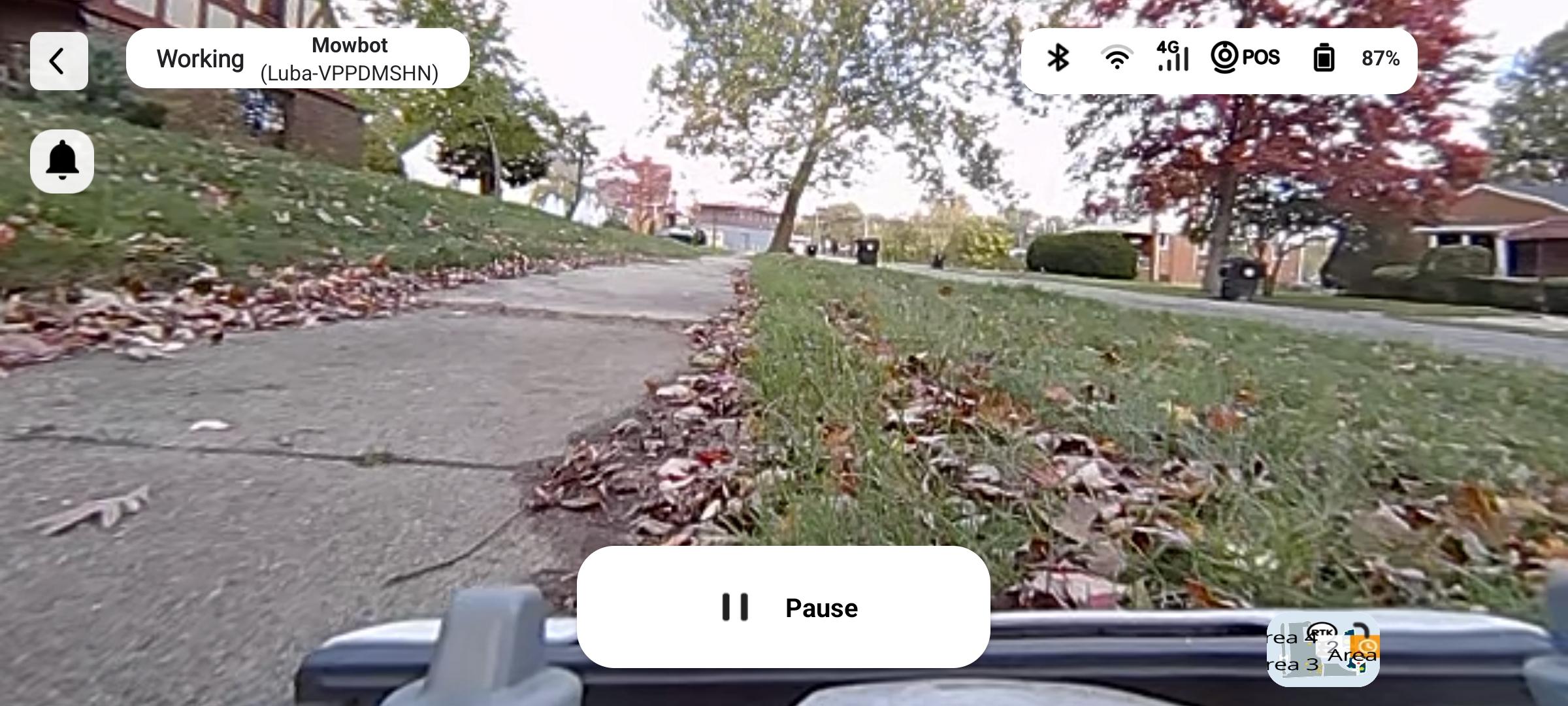
The truly mid-tier lawn robots don’t need a physical guide wire. Instead, they use GPS. This makes for a much easier setup process, but the downside is that you need good, clear line-of-sight to the sky from your robot’s base station. This can mean mounting the station high on your home or running electrical service to a remote portion of your yard (someplace without an obstructed view of the sky). You’ll still need to “train” your robot so that it doesn’t wander into your neighbor’s yard, but it’s generally set-and-forget. You’ll only need to re-do the process if your lawn physically changes (you add a driveway or landscaping bed, for example) or you have to move the satellite mast for some reason.
As you might expect, lidar is still a premium feature, and it’s one that denotes the top tier of available consumer lawn bots. While there are some affordable lidar-equipped models in Europe, only a couple of robots available in the U.S. offer it at all, and for the moment, they’re expensive—like “Maybe that electric zero-turn isn’t so bad after all” expensive. While lidar may have been the reason why I ended up down my rabbit hole, I ultimately decided that was overkill for my purposes and settled for a mid-tier model: the Mammotion Luba 2 AWD 3000 H. The “H” denotes the high-lift model, which I needed for the messy, uneven berm left along my rear fence line by the previous homeowner.
The spec sheet reads like an EV’s: dual motors, ultrasonic + camera object detection, variable cut height (2.2-3.9 inches), a full suspension, and GPS-based navigation. The all-wheel drive not only gives it great slope coverage, but also gives it zero-turn functionality. It can move at up to 4 feet per second (a little under 3 mph) but cuts at much lower speeds to allow its tiny, disc-mounted razor blades to do their job. Cool, right? And not cheap, at least relative to a swanky self-propelled electric. The 3000H set me back $2,400 (and probably costs more now that tariffs have ramped up). But on the flip side, it requires exceedingly little maintenance (and no subscription) and works exactly as advertised.
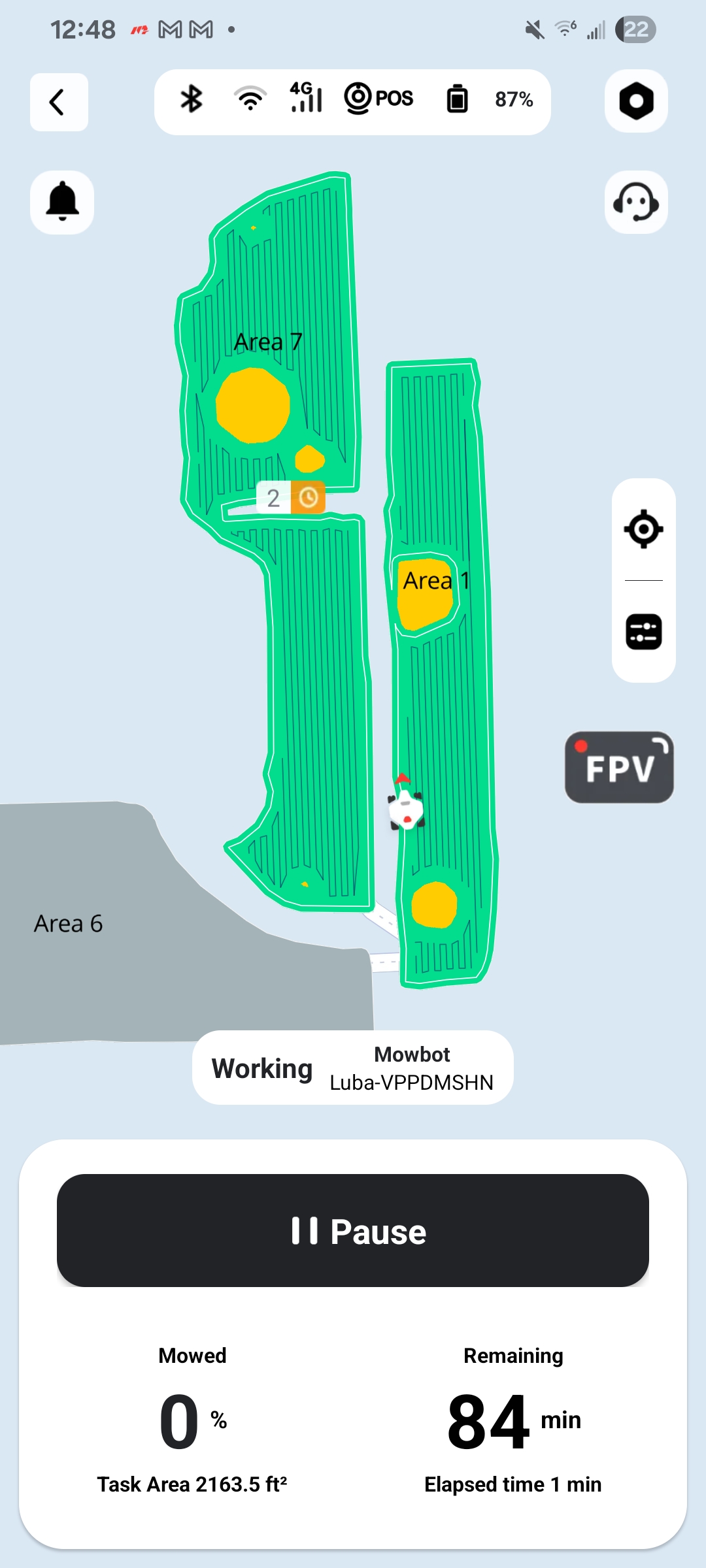
I’ve been using the Luba 2 constantly since early September with only minor hiccups. Twice, it has gotten wrapped up in some Virginia Creeper that was lurking by my back fence. Both times, I got an alert on my phone that it needed rescuing. And once, a few weeks ago, it was flummoxed by critters feeding on the landscaping near its charging port. After its obstacle detection was triggered over and over, the mower simply gave up and waited to be rescued. In this case, its own silence worked against it. Mammotion rates it at 60dB max; in real-world terms, it’s quieter than passing traffic, and similarly inoffensive to the hardened squirrels that make their homes nearby.
You may have noticed that, despite all of my praise, I haven’t mentioned the actual thing I set out to address in the first place. After all, cut time was my biggest complaint. You would think I’d be focused almost entirely on that aspect of ownership. Frankly? It’s very slow, especially compared to how quickly I was able to mow the same area with my Ryobi. But here’s the thing: it doesn’t matter.
It may sound like I’m making excuses for it, but it’s true. Yes, I cared about the cut time when I was the one doing the cutting. Of course I cared, that was my time that I could have spent doing something else. But the mowbot doesn’t need my time. It just does its thing, either following a set schedule or when I command it. It can take all the time it needs (to do the entire yard, that would be about three hours plus a ~30 minute charging break) because it’s not asking anything of me.
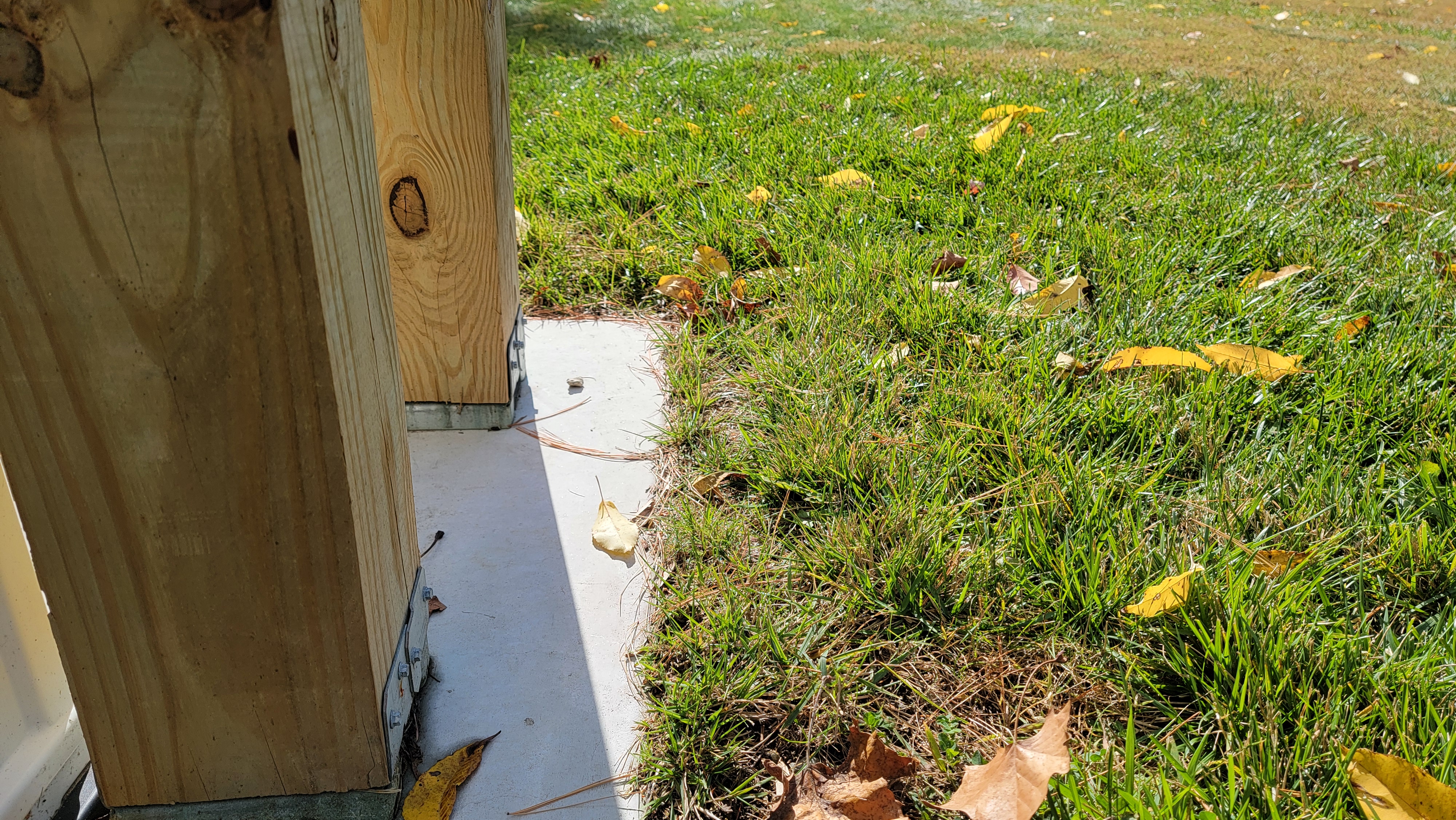
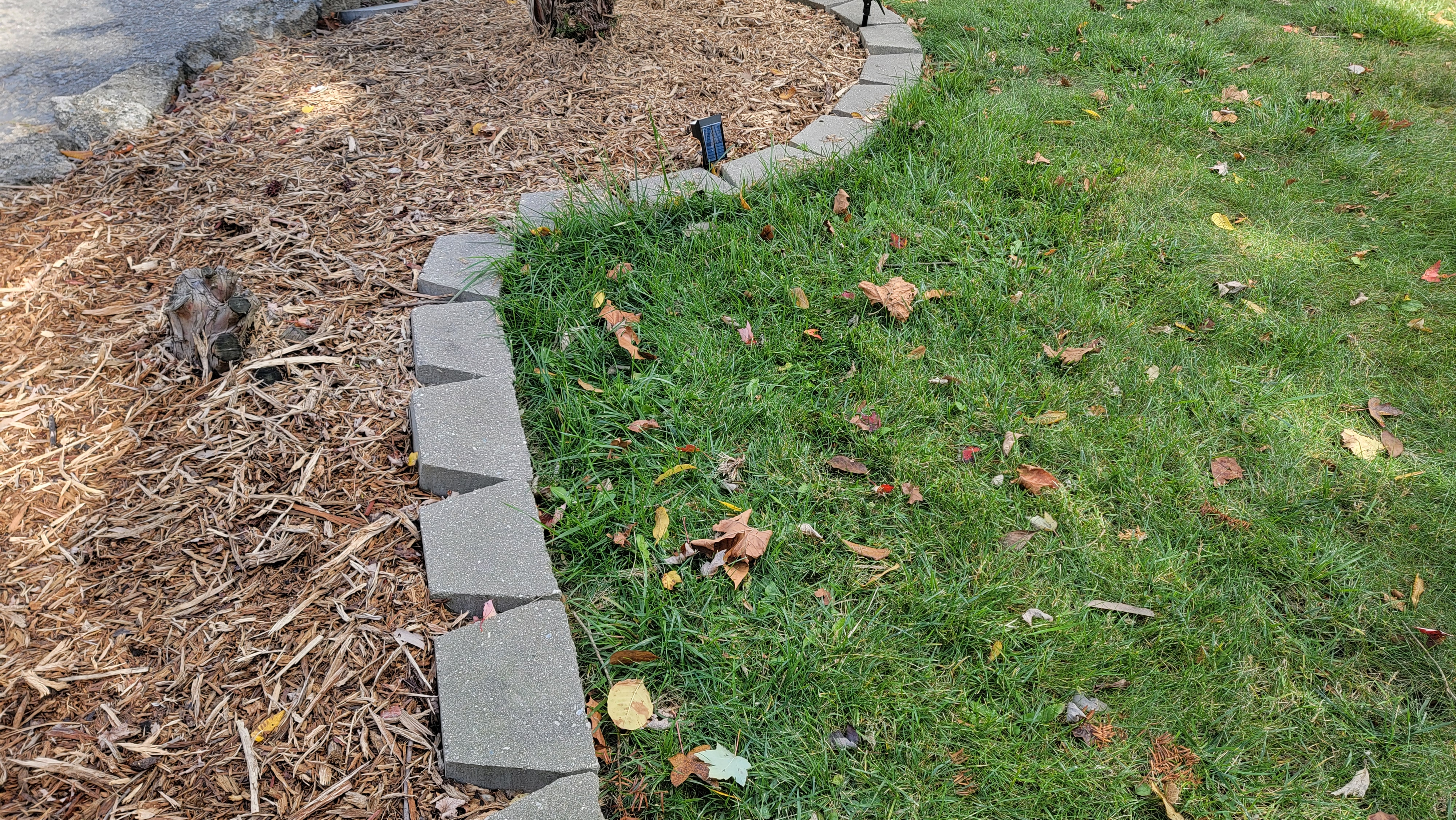
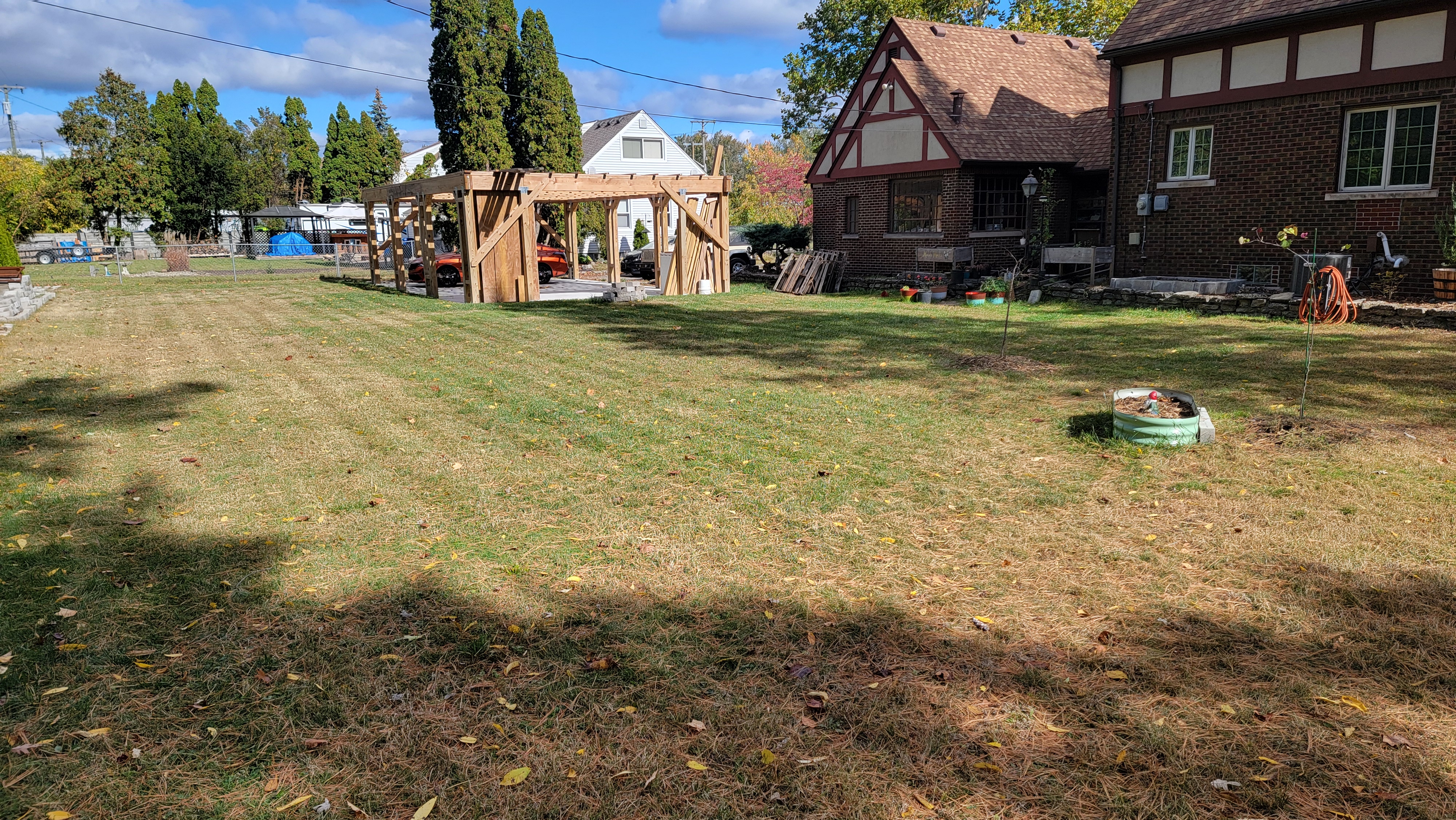
And as smart as it may be, there are still some things a mowbot can’t do. Some more-complex nooks and crannies are better done by hand when I trim and edge. If you have irregularly shaped landscaping (say, natural stone) that juts out at unpredictable angles and intervals, you’re better off setting a straight edge boundary for the mowbot and cleaning it up yourself. There are some mowbots out there with integrated trimmers or modular trimmer attachments, but in my opinion, the tech doesn’t really support that level of precision quite yet—at least not without lidar. And all of that would also be true of a zero-turn. Ponder that.
Honda’s contraption may be ridiculous, but the idea of automated lawn-mowing isn’t. There’s an option out there to suit every budget, and several manufacturers still respect their customers enough not to force them into maintenance or cloud subscriptions. Are there risks? Certainly. If Mammotion shuts down tomorrow, my cloud-based tasking dies with it and I’ve got a $2,400 piece of high-tech lawn art. Shop smart!
Note: This was not a sponsored post. Neither The Drive nor the author received any consideration from Mammotion, direct or otherwise, for the content of this article.
Are you privy to an imminent lawn robot uprising? Let the author know at tips@thedrive.com.
The post You Don’t Want a Self-Driving Lawnmower. You Want a Mowbot appeared first on The Drive.
Posts Widget
- 1

- 2
- 3
- 4





Copyright © 2025 · ORUC GLOBAL · All rights reserved


