

This Guy Is Making DIY ‘Gasoline’ Using Old Plastic and Solar Power

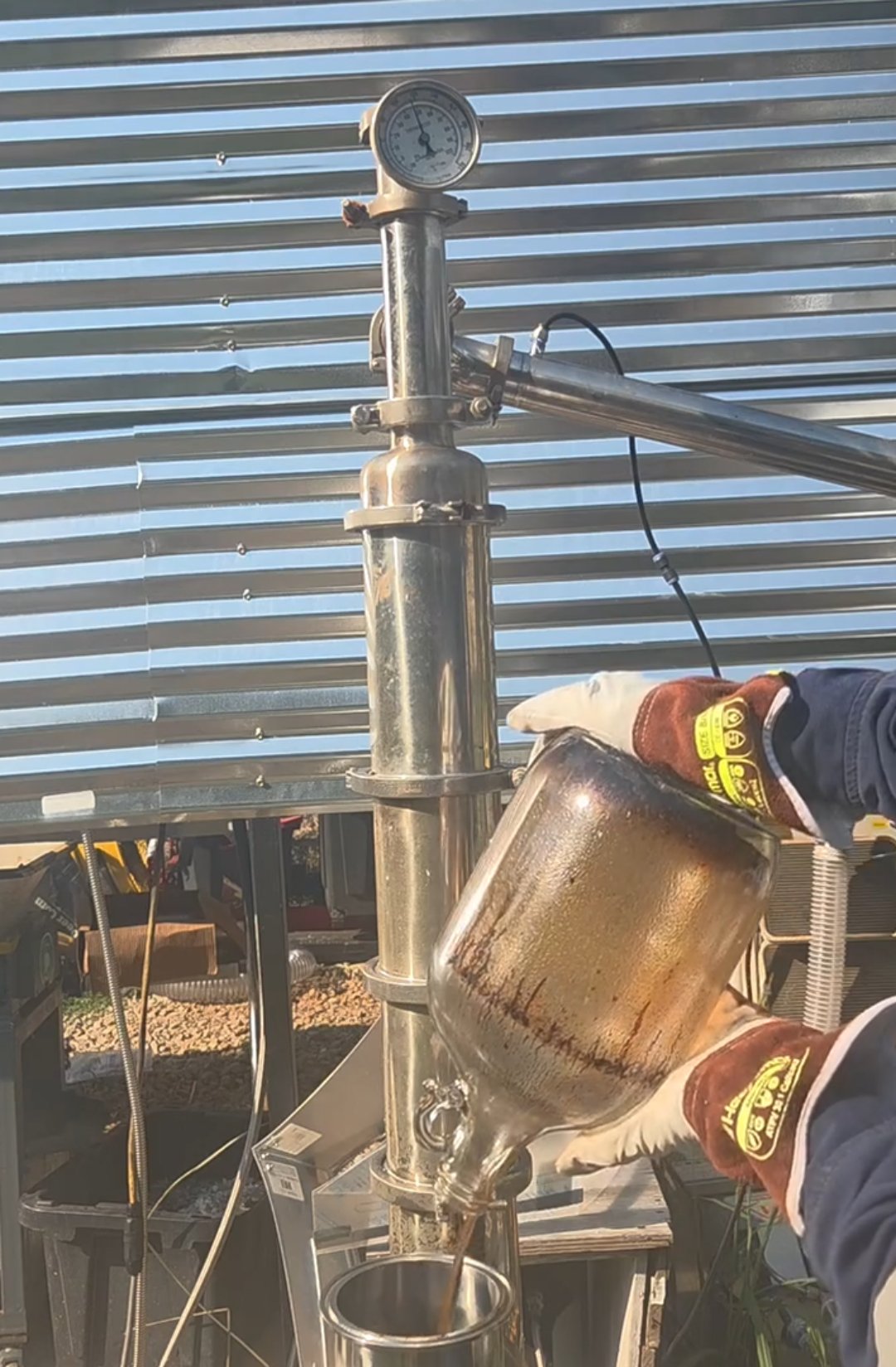
It’s a killer pitch: Turn plastic waste into gasoline using only* the power of the sun. And that’s exactly what serial entrepreneur Julian Brown (@naturejab_ on Instagram) claims to be doing, using all DIY equipment in what very well might be his own back yard. He calls it “plastoline.” Elegant. But is it legit?
This clip is light on details, but it appears that Brown is simply combining two known mechanisms: extracting ethanol from an existing petrochemical compound (consumer-grade plastics, in this case) and distilling that ethanol into an octane (the chemicals that give gasoline its rating) that can be used as fuel. Yes, if you’ve ever watched a documentary about the south during prohibition, all of this looks vaguely familiar for a reason: What you’re looking at is effectively an elaborate still.
There are several reasons why you can’t—or at least why you probably shouldn’t—try to replicate this setup at home. The first one’s pretty obvious: Stills blow up. Virtually every “How do I make my own gasoline?” post on the internet has a high-ranked reply that boils down to “Don’t. You’ll kill yourself. Try diesel instead.” Seriously, even AI will tell you this is a bad idea. Ponder that.
And then there’s the other elephant in the room: cost. Sure, there’s no meter on the sun, but the solar setup here is pretty robust. Brown shows the equipment with an electrical load of more than 14 kilowatts—that’s about 60 amps on a normal, 240-volt circuit, or enough to run a high-quality home EV charger at full tilt. You’re not doing that with an over-the-counter solar “generator.”
Our enterprising chemist could have obtained the waste plastic from just about anywhere, but we’re looking at some high-quality industrial equipment here. Pressure- and heat-rated vessels aren’t cheap—let alone free—and I doubt most folks have an octane tester just lying around. While I have no doubt that an enterprising DIYer could replicate this setup, doing so isn’t possible with a quick trip to Home Depot.
That brings us to another catch: the hobby cost curve. Ask anybody who got in on the biodiesel fad during the Great Recession: it started out “free” enough, but once enough people caught on, acquiring the waste grease became both more difficult and, eventually, often prohibitively expensive.
This concept probably exists elsewhere with a more sophisticated name, but what I’m referring to here is a pretty simple supply-demand curve. Specialized equipment for niche hobbies tends to be expensive. If the hobby becomes more popular, the demand will often force expansion of equipment production, perhaps inducing competition at (potentially) lower prices. By becoming more popular, it becomes more accessible.
But if the demand keeps increasing and costs keep coming down, what was once a cost-prohibitive, niche product can becomes something that is attractive to mass-produce and commoditize. When this happens, the affordability curve flips the other way. Raw materials become attractive to investors, and the pipeline of inexpensive waste begins to dry up, ruining the cost-benefit ratio for hobbyists and small operators.
So, in other words, while this may seem attractive to the DIYer, it’s not something that is commercially viable at scale—at least not yet. Capitalism, baby!
Got a news tip? Let us know at tips@thedrive.com.
The post This Guy Is Making DIY ‘Gasoline’ Using Old Plastic and Solar Power appeared first on The Drive.
Posts Widget
- 1

- 2
- 3
- 4





Copyright © 2025 · ORUC GLOBAL · All rights reserved


