

This 1934 Cadillac Changed the Way Europe Built its Best Cars. Now It’s for Sale
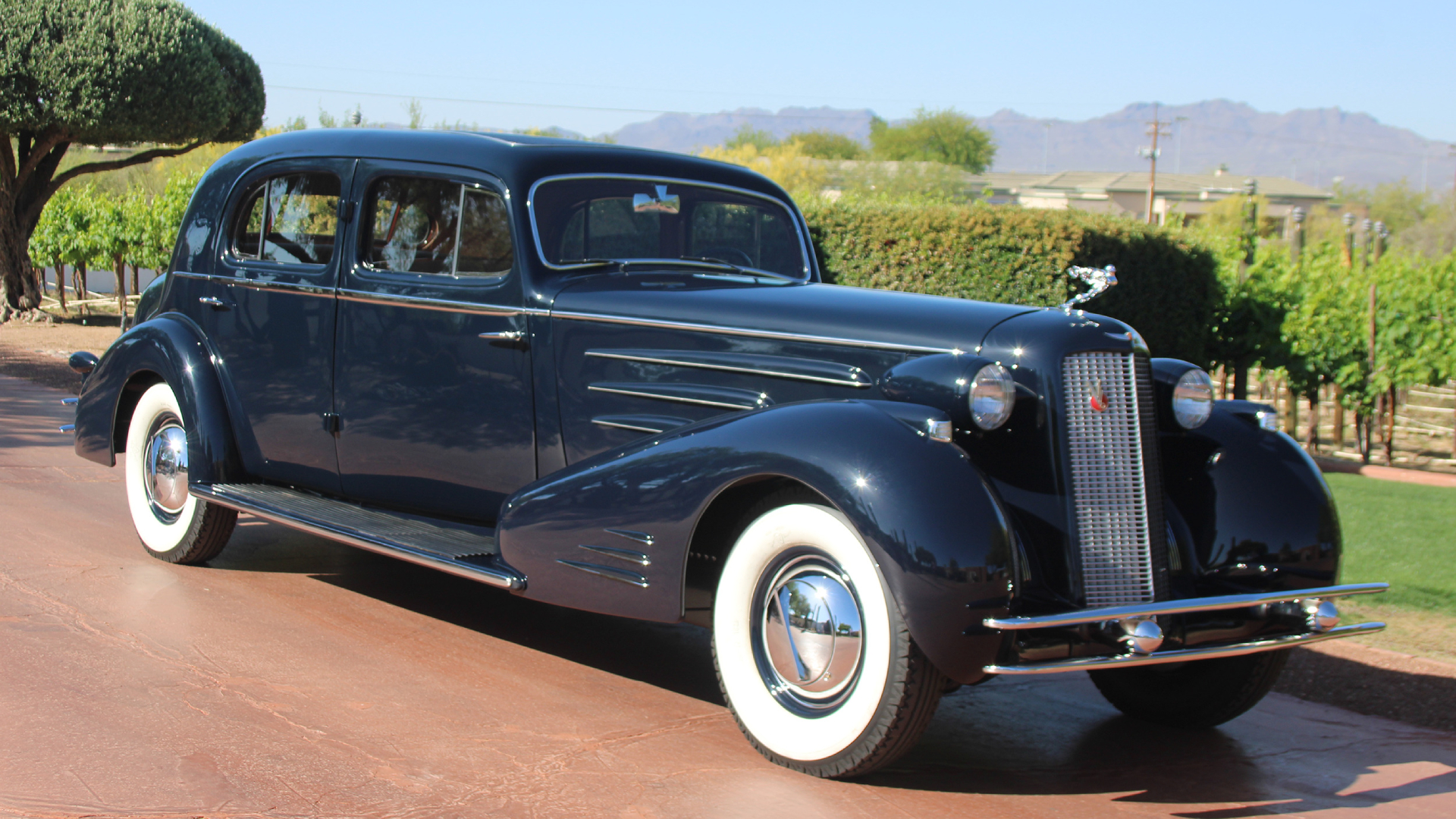
80 years ago, Cadillacs were the standard of the world. I use lower-case there because it wasn’t just a slogan, it was reality. Nothing embodies that ethos more than the 1934 Cadillac Fleetwood. It was the Depression car to buy—not the American Depression car to buy, the Depression car to buy. In fact, it was so coveted that Europe’s best wanted to reverse-engineer it in order to make their cars better. And it came from a time when engineering and design were divorced from each other in a way that simply doesn’t exist in the modern era.
Why a Cadillac? And why this one specifically? Settle in; this is going to take some time.
It’s nearly a century old, but this Cadillac employed a lot of engineering that has stood the test of time. It was one of the first with a Hypoid rear differential gearset (notably trailing Packard, which was simply ahead of the entire industry in the 1920s and ’30s). This gear shape allowed for a more compact design than old-school helical gears, which in turn meant the rear body floor could sit lower. Yes, the industry’s ongoing quest to increase rear legroom goes back even longer than you think.
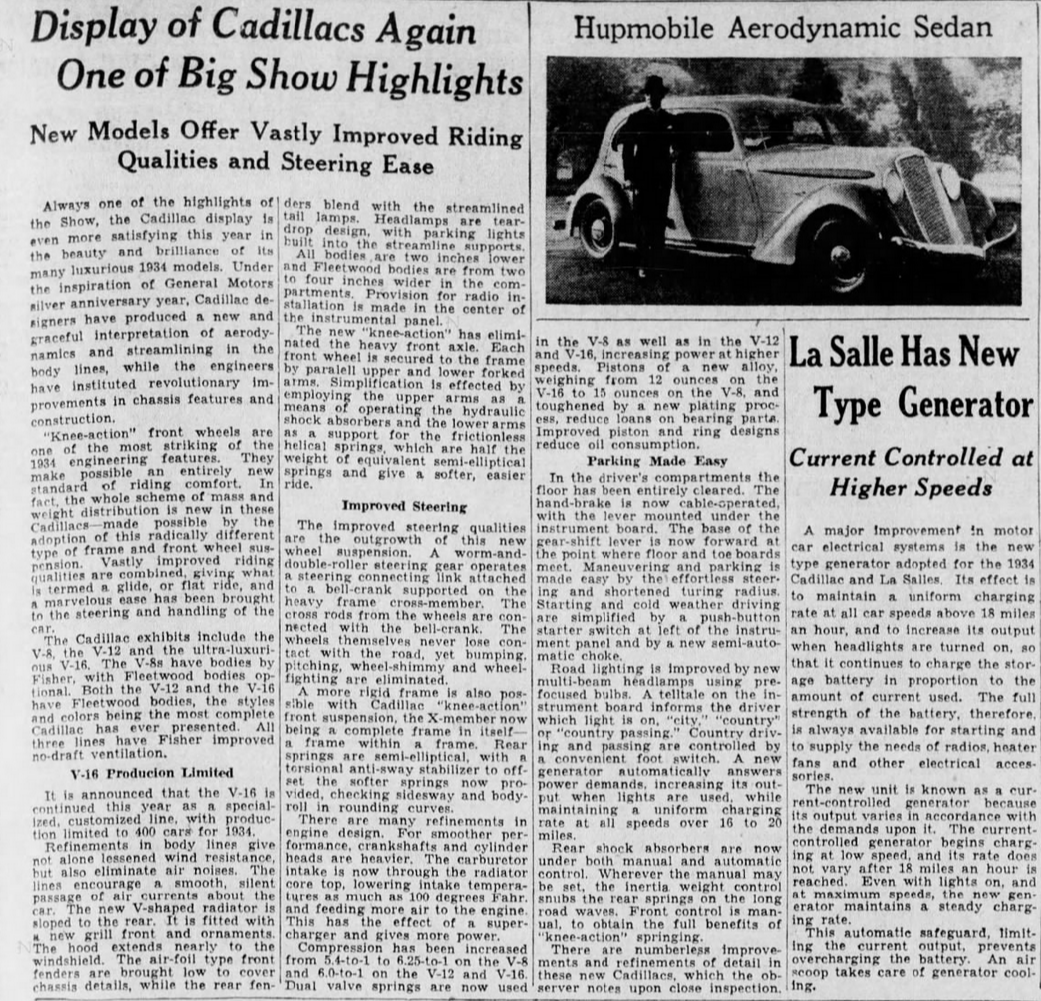
But forget about the back, let’s go up front. 1934 was also the first year of Cadillac’s new “Knee-action” front suspension. The Detroit Free Press (above) does a great job of regurgitating Cadillac’s press kit (Yes, journalism has near-century-old-parallels too), but what GM’s engineers are describing here is an early independent front suspension mounted to a fixed cross-member. In a world where most mainstream cars were still only a generation or two removed from actual horse-drawn buggies, this was a big deal.
1934 was also the first year for push-button start (we took a multi-decade break to account for thievery, I suppose), semi-eliptical rear leaf springs (another handling boon), and a voltage-regulated alternator. That last bit may not sound exciting, but it translated to headlights that shone equally bright at any speed—oh, and on the subject of headlights, it was the first year for toe-activated high-beams.

“In the driver’s compartments the floor has been entirely cleared,” the Freep’s coverage said. “The hand-brake is now cable-operated, with the lever mounted under the instrument board. The base of the gear shift lever is now forward at the point where floor and toe boards meet.”
See? Even 80 years ago, it was all about freeing up cabin space. Then again, 80 years later, nobody has fully articulated what we’re freeing all that space up for, exactly. Maybe we’ll nail that down by the time this Caddy turns 100.
Despite all of those advances, what Europe truly coveted was Cadillac’s engine lineup. The 1934 Cadillacs came in three flavors: V-8, V-12, and V-16. The V-8 got a pretty big compression boost for ’34 (about 15%) while the V-12 and V-16 settled for a modest ~11% or so. The two bigger engines also benefited from redesigned pistons with a new plating process and a new ring design to reduce oil consumption. A dual valve-spring setup also allowed all three engines to breathe better at higher RPM.
By today’s measure, the V-16 is somewhat unremarkable apart from its displacement and generous cylinder count. It checked in at 549 cubic inches—one might be inclined to round that to an even 9.0 liters—and made just 185 horsepower. But 180 of those were probably available from idle on up; that’s one big chunk of American iron.
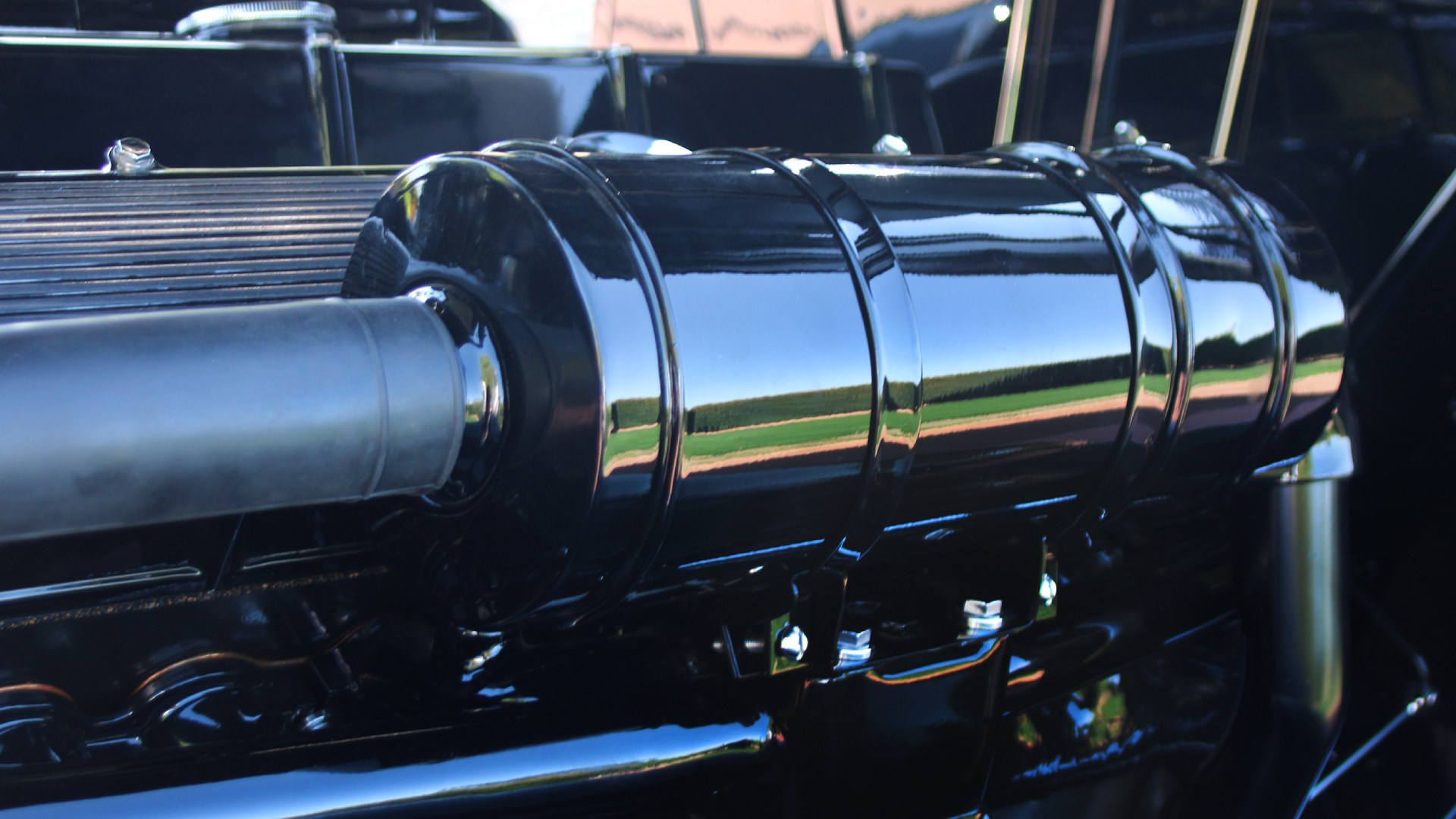
Of the three, only the V-12 and V-16 were available with Fleetwood bodies. The Fleetwood was Cadillac’s tier-zero offering: the golden peak on its automotive pyramid. And that’s the one Walter Owen Bentley (that Bentley) had his eyes on. His firm having recently been purchased by a competitor going by Rolls-Royce Motor Cars, Bentley wanted to experience the fruit of Cadillac’s labor for himself, hoping it would inspire the next generation of motors for the new British partnership. The company’s last in-house design before its bankruptcy was the 8.0-liter inline-six found under the hood of the (wait for it) Bentley Eight Litre. Being literal was a thing back then.
This Fleetwood was shipped to Europe, where Bentley spent a year putting 10,000 miles on it before handing it over to his bespectacled minions for study. After reverse-engineering the V-16, Rolls-Royce sold it to the British government for use by a diplomat at the U.S. embassy—likely then-ambassador Joseph P. Kennedy. Though Bentley was allegedly in awe of the Cadillac, he left about as quickly as the car did, departing for Lagonda (which was later gobbled up by Aston Martin) in 1935, and what Rolls-Royce gleaned from dissecting the big American sedan was largely put on hold thanks to a vengeful little Austrian with some bad ideas and a drug problem. Sales of luxury cars in Europe didn’t recover from the Depression until well after World War II.
It’s no wonder the Cadillac impressed Bentley. It was a design and engineering standard-bearer. And it was correspondingly expensive. According to a 1930 Free Press article, the average sale price of a Cadillac Fleetwood was nearly $5,000—that’s what the original owner paid for my current home in 1930. The decades have been far kinder to the Cadillac; my house would need a change of zip code to command nine figures even in today’s hot real estate market.
The past decade has been very kind to this particular Fleetwood, which has now undergone a ten-year restoration under the watchful eye of two separate owners—one in Oklahoma, who began the project, and the second (and current), an Arizona man by the name of Steve Nannini.
If you follow the vintage circuit, the name (and this car) may be familiar to you. Nannini’s restoration efforts didn’t get in the way of showing the car at Pebble Beach in 2024. And now that it’s done, it’s for sale, and not via one of the “traditional” means. It’s not going to grace a Mecum auction or be the subject of a back-room Car Week handshake. It’s going to be sold via a dealer that usually specializes in antiquities.
Andrew Fields, President of M.S. Rau Antiques, the firm handling the Fleetwood’s sale, says that the car’s deep history could appeal to virtually any buyer.
“I often think who is going to buy this car, who wants it? Obviously there’s car collectors, that goes without saying, and people who may want to acquire something and then take it to compete,” Fields told me. “But I also think it could be a tech guy, it could be a guy in the 20s, 20s, and 30s who just finds it super cool, embraces the advances in the technology that existed then, and has the wherewithal in the space and it just be totally different than, anything else that, they may come across. So I think that it’s a blank canvas on who potentially has the capability or who may want to step up and get familiar with it.”
Rau only rarely dabbles in automobile sales—typically when they’re included as part of a broader collection or estate. A one-off collector vehicle like this is new territory. Fields is more at home with Monets and van Goghs than Fleetwoods or Duesenbergs. This is new territory, but some aspects translate. It’s all about provenance. Combine an important maker (artist) with a significant model (subject) and throw in a perfect execution and you have a winning formula whether the medium is canvas or carbon fiber.
“When you have all that together, that’s when you have the masterpiece,” Fields said.
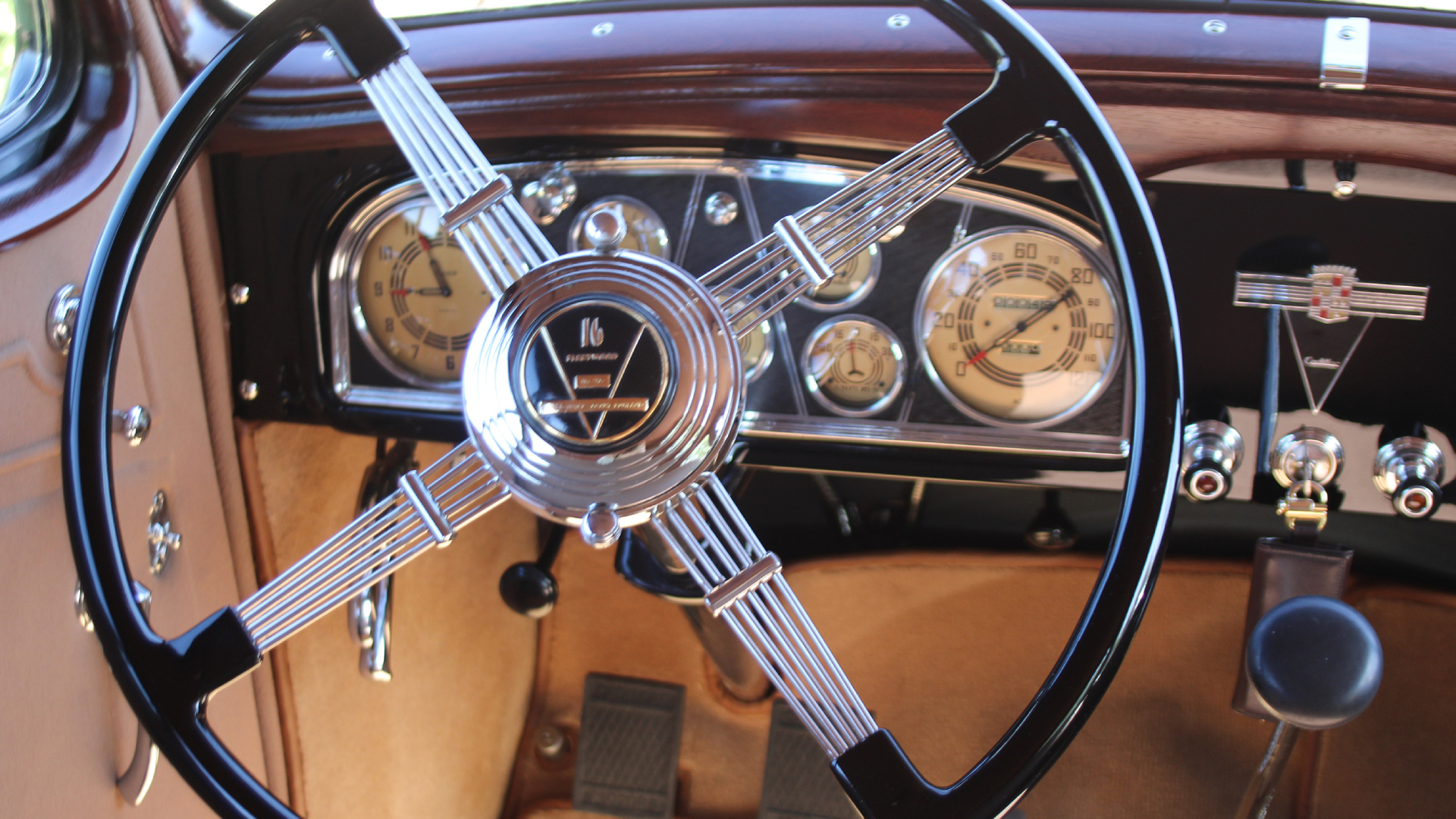
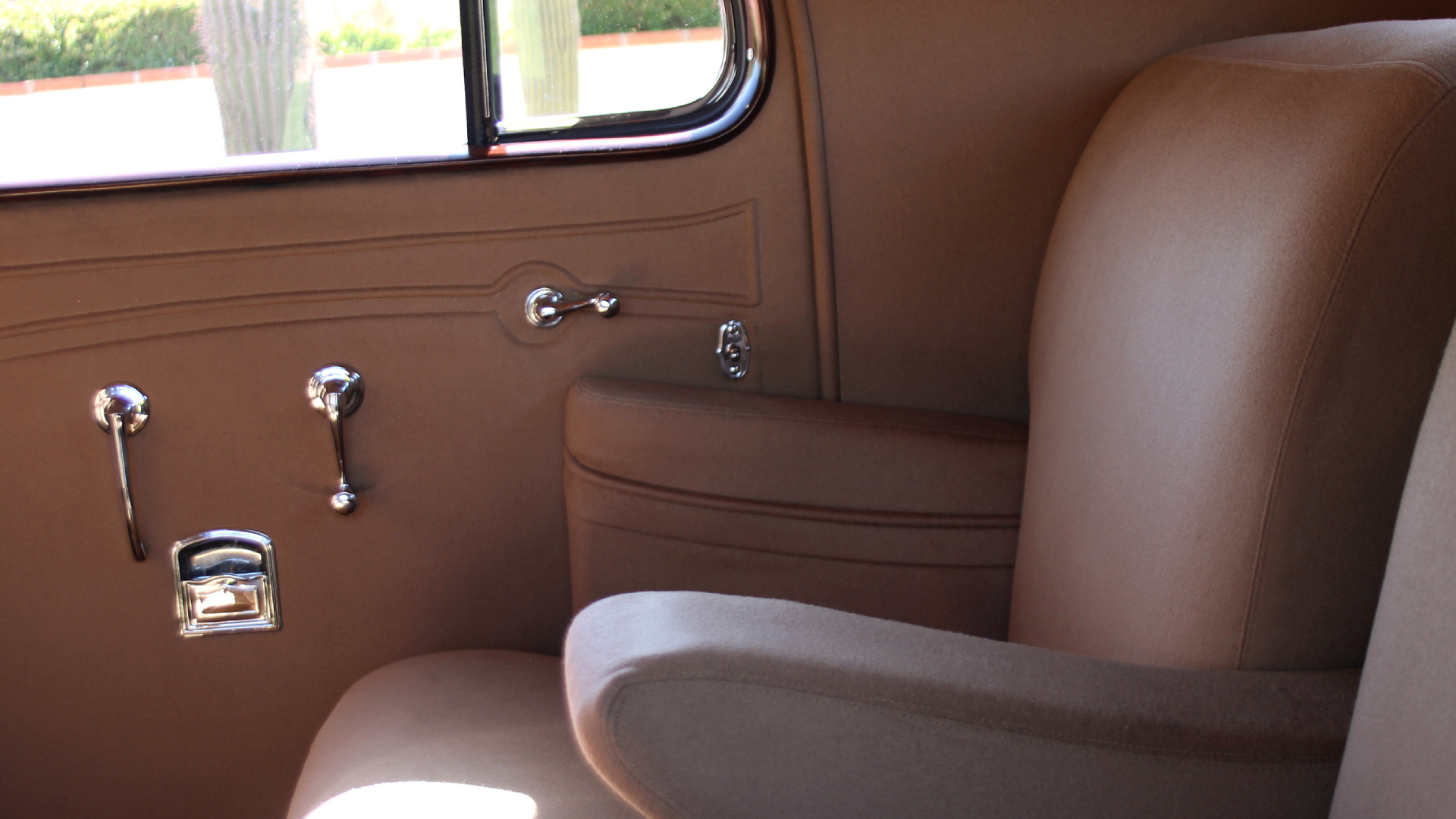
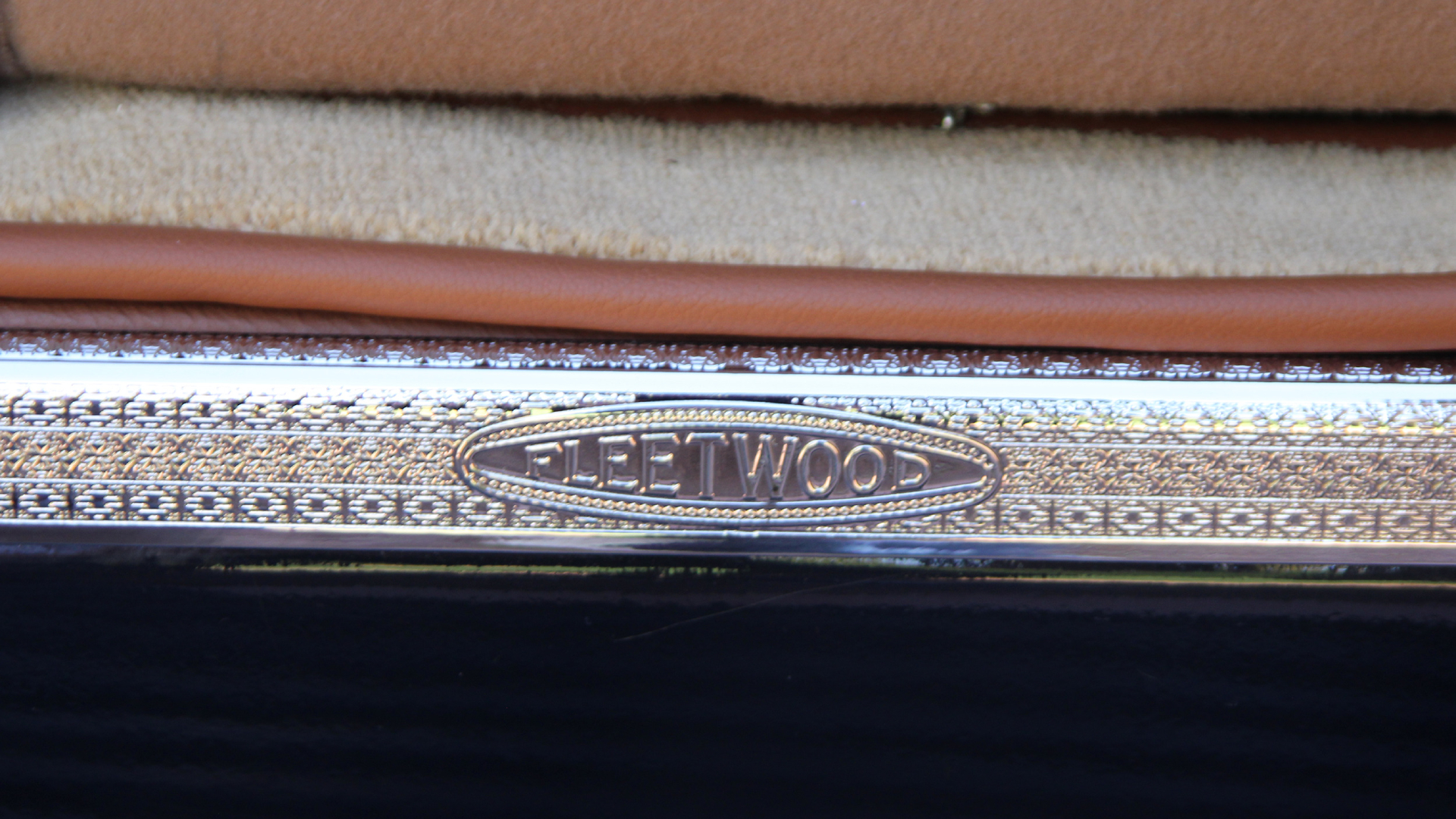
And there are vanishingly few of these masterpieces left in the world. Per M.S. Rau, which is handling the sale of V-16 #5100024, it’s one of only 43 known survivors—and it had to survive quite a lot. Consider this: 1934 wasn’t just Depression-adjacent, it was smack-dab in the middle of the dip, just as the U.S. economy was beginning to recover. As with all such downturns, it spared the truly wealthy, but the ripple effects nonetheless forced a lot of belt-tightening. That’s the long way of saying that sales weren’t amazing to begin with.
But with old-school luxury cachet comes old-school luxury depreciation. These things devalued like celebrity meme-coins. Ads for used Fleetwood sedans (V-12 and V-16 alike) litter the Free Press classifieds throughout the ’30s. Some asked as little as $1,600 for cars only a year or two old—more than 50% depreciation. Judging by the asking prices (and how long some of these cars languished in the classifieds), the late ’30s were not kind to secondhand Fleetwoods. Certainly, the economic climate did their resale value no favors.
Remember, commuting as we know it barely existed back then. If an executive had to go more than a few miles to visit the office, it probably meant he was coming back from week-ending at his country estate. By modern standards, these cars would be gently used. By the standards of the day, well, that’s a different story. Remember, both horses and their carriages broke a lot. The bar wasn’t exactly sky-high.
And on top of all that, this one survived a trip around much of the western hemisphere.
The post This 1934 Cadillac Changed the Way Europe Built its Best Cars. Now It’s for Sale appeared first on The Drive.
Posts Widget
- 1

- 2
- 3
- 4





Copyright © 2025 · ORUC GLOBAL · All rights reserved


