

2026 Hyundai Palisade Hybrid First Drive Review: The Luxurious, Efficient SUV That Puts Rivals on Notice
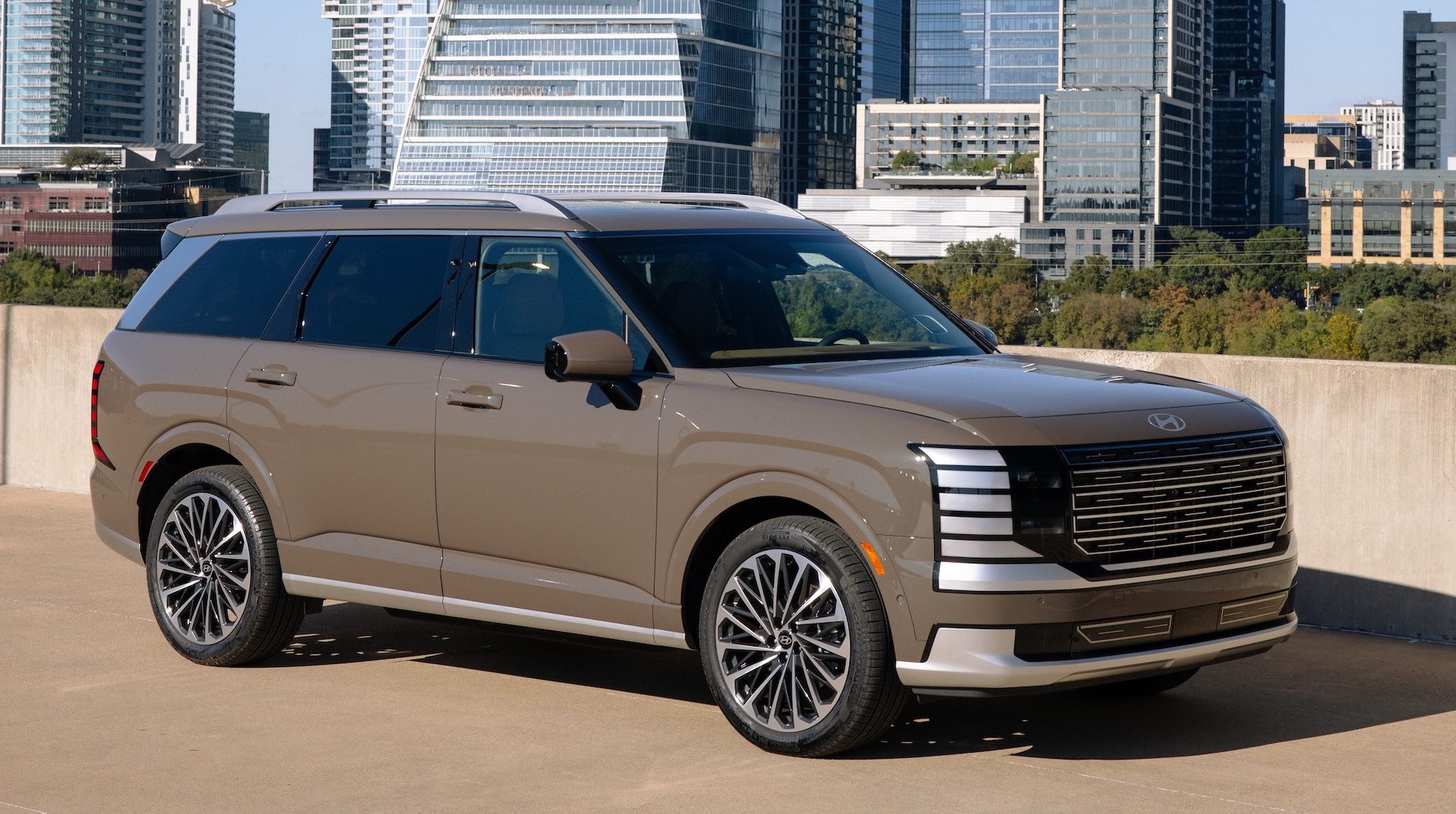
Hyundai has built a stellar lineup of crossover SUVs of all sizes and shapes, stepping into new segments without a hitch (except for the towing one). When Hyundai launched its Palisade three-row SUV in 2020, it instantly outclassed a slew of rivals that had decades to prepare for its advance, and didn’t—vehicles ranging from the Jeep Grand Cherokee to the Buick Enclave to the Lincoln Aviator.
Now that it’s tasted blood, it’s moving in for the kill. This year, Hyundai has an even better Palisade on the docket, one that’s larger, more refined, and better equipped than ever.
Oh, and now it’s more efficient than ever, too.
With the 2026 Palisade Hybrid, Hyundai has crafted a multi-talented crossover SUV that can pivot from carpooling to moderate towing to scene-making, with a fuel economy rating as high as 34 mpg combined.
The Basics
A fully revamped version of the full-size, three-row SUV that bowed in the 2020 model year, the 2026 Palisade Hybrid seats up to eight passengers and delivers a rich infotainment experience through twin 12.3-inch displays.
It sits at the top of the Hyundai lineup, and as the brand’s flagship vehicle, it’s hard not to see the Genesis influence in the serene and high-quality fittings that line the Palisade’s quiet cabin. Its new hybrid drivetrain is a tour de force in fuel economy, but it’s the finer details and little touches like a dash cam, massaging second-row seats, and a power-sliding, heated third-row seat that can host taller passengers that feel like an end-zone celebration.
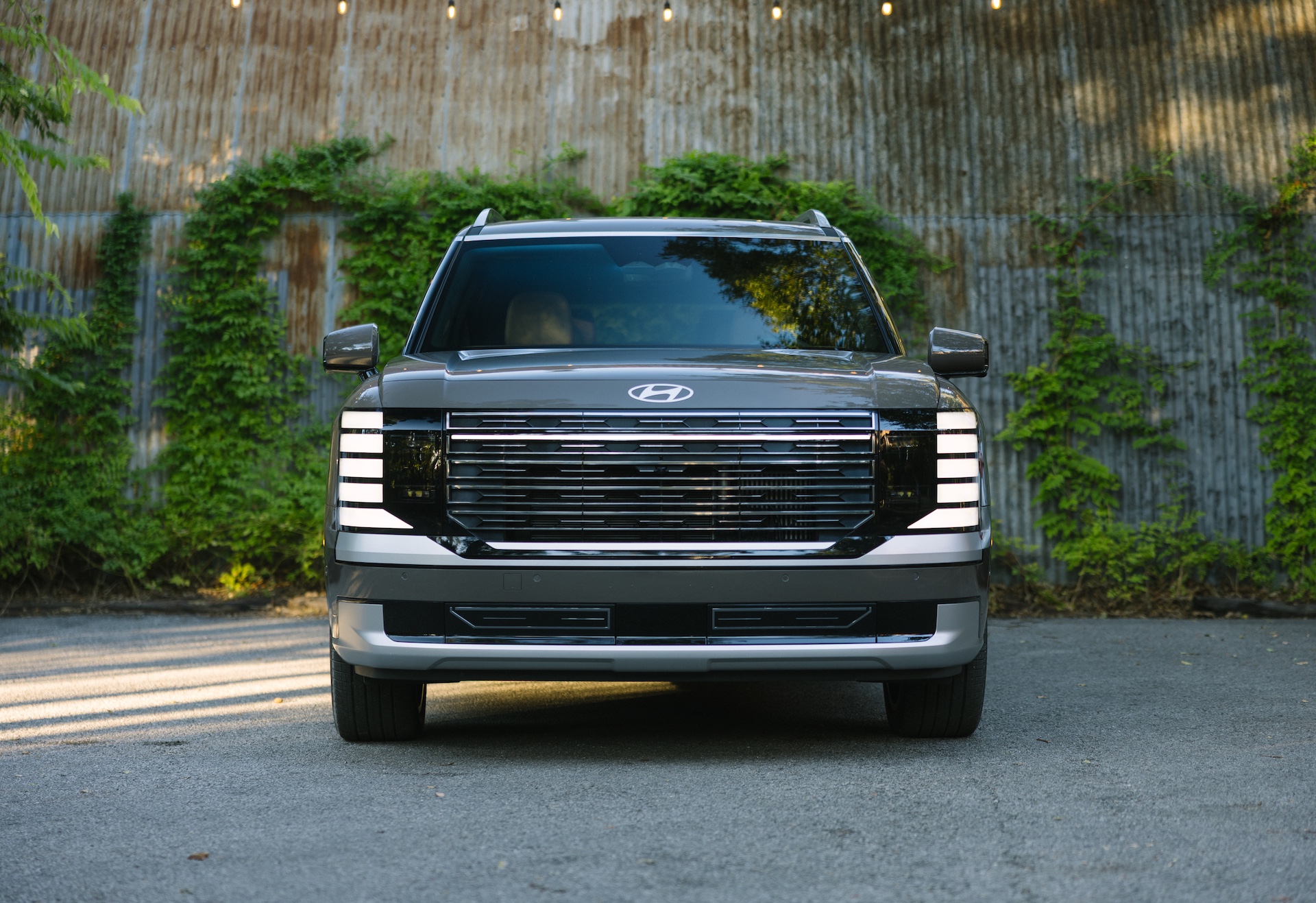
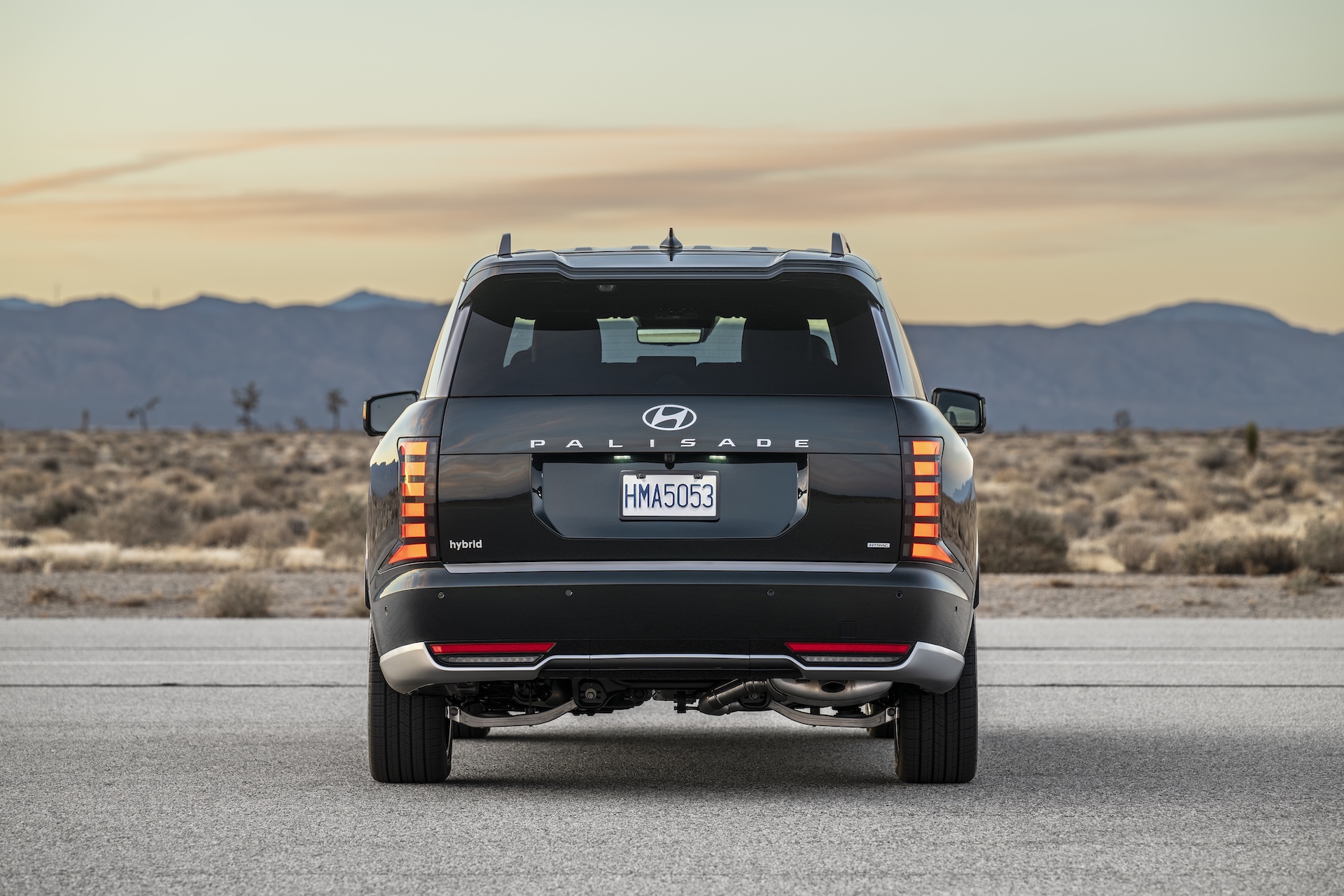
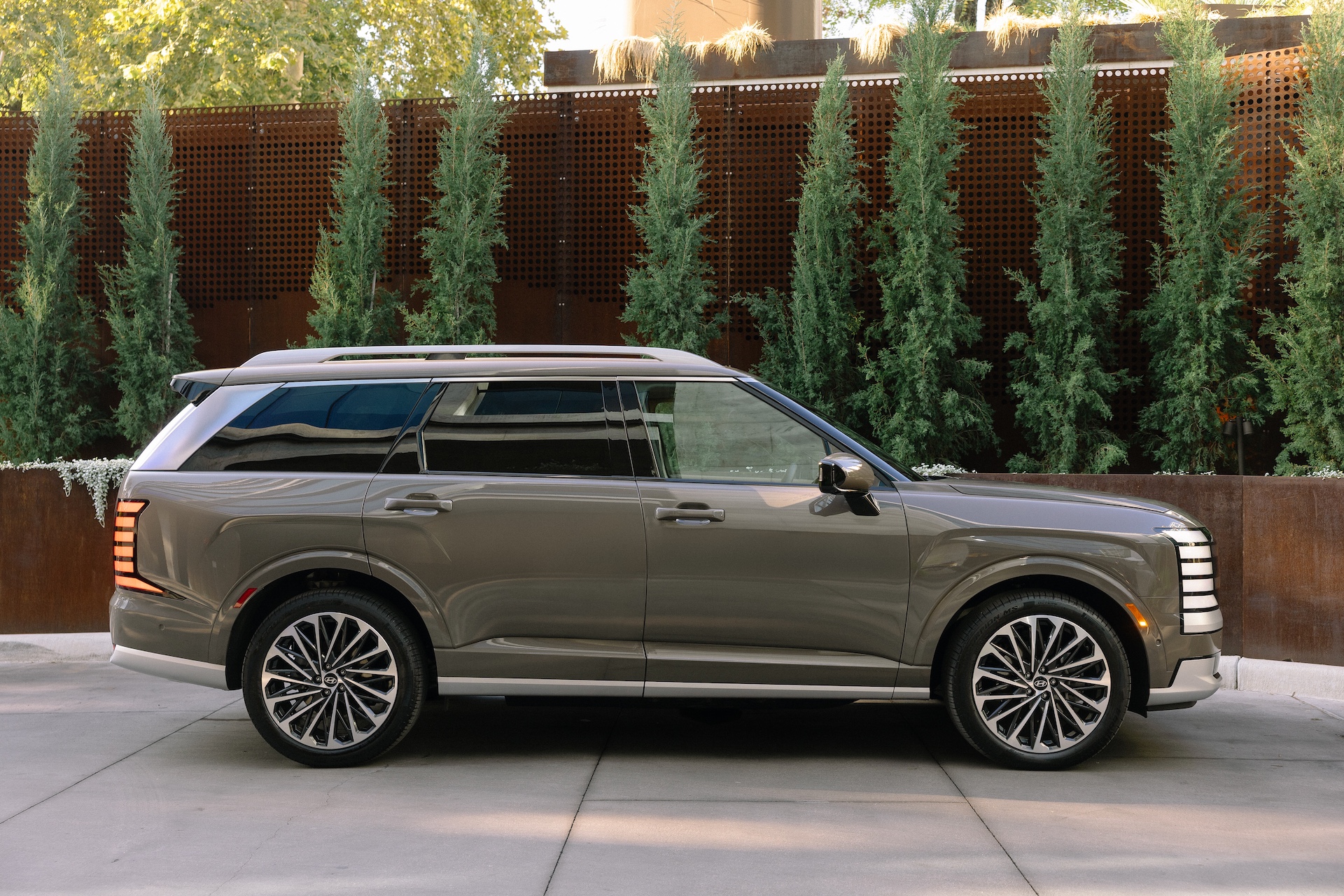
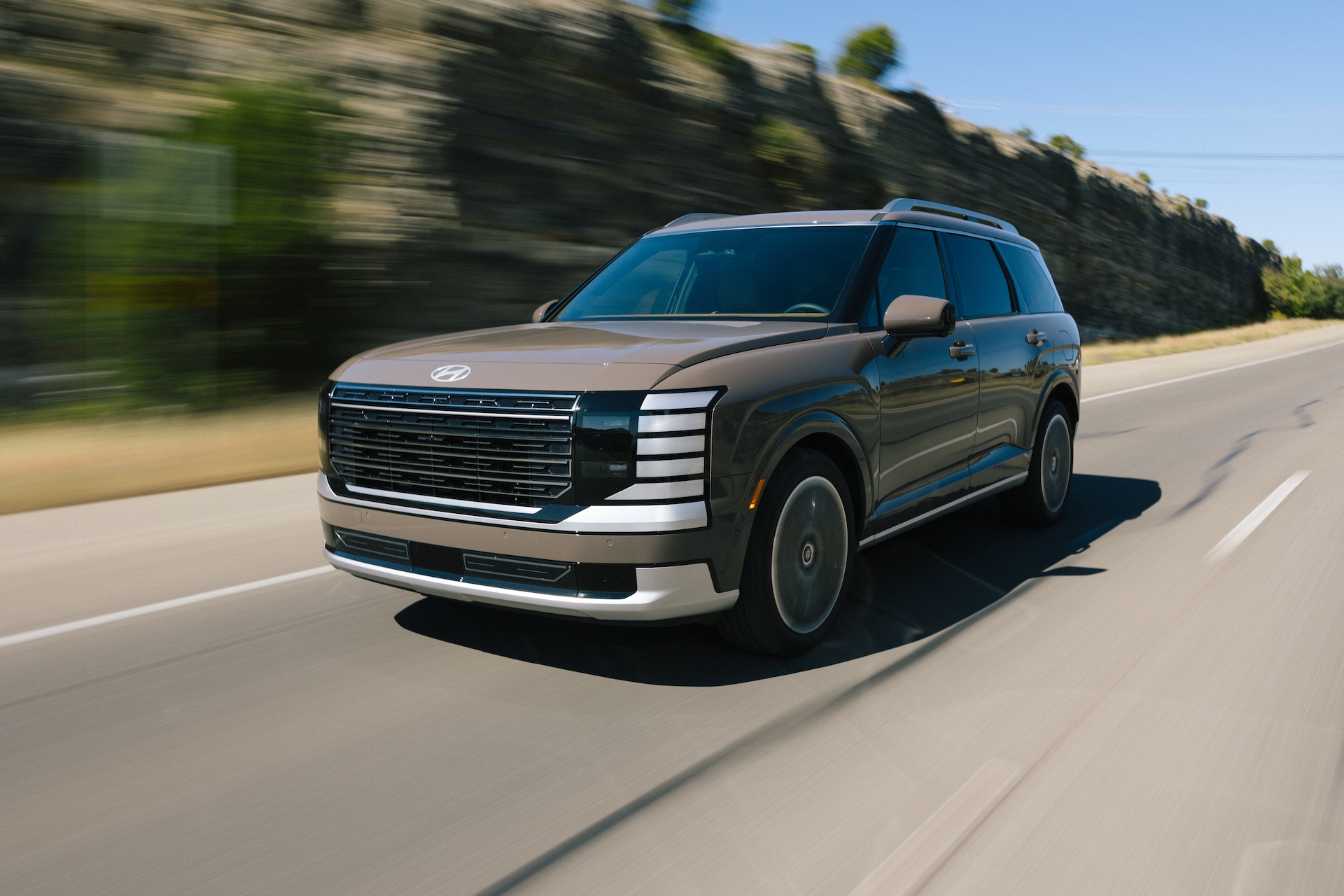
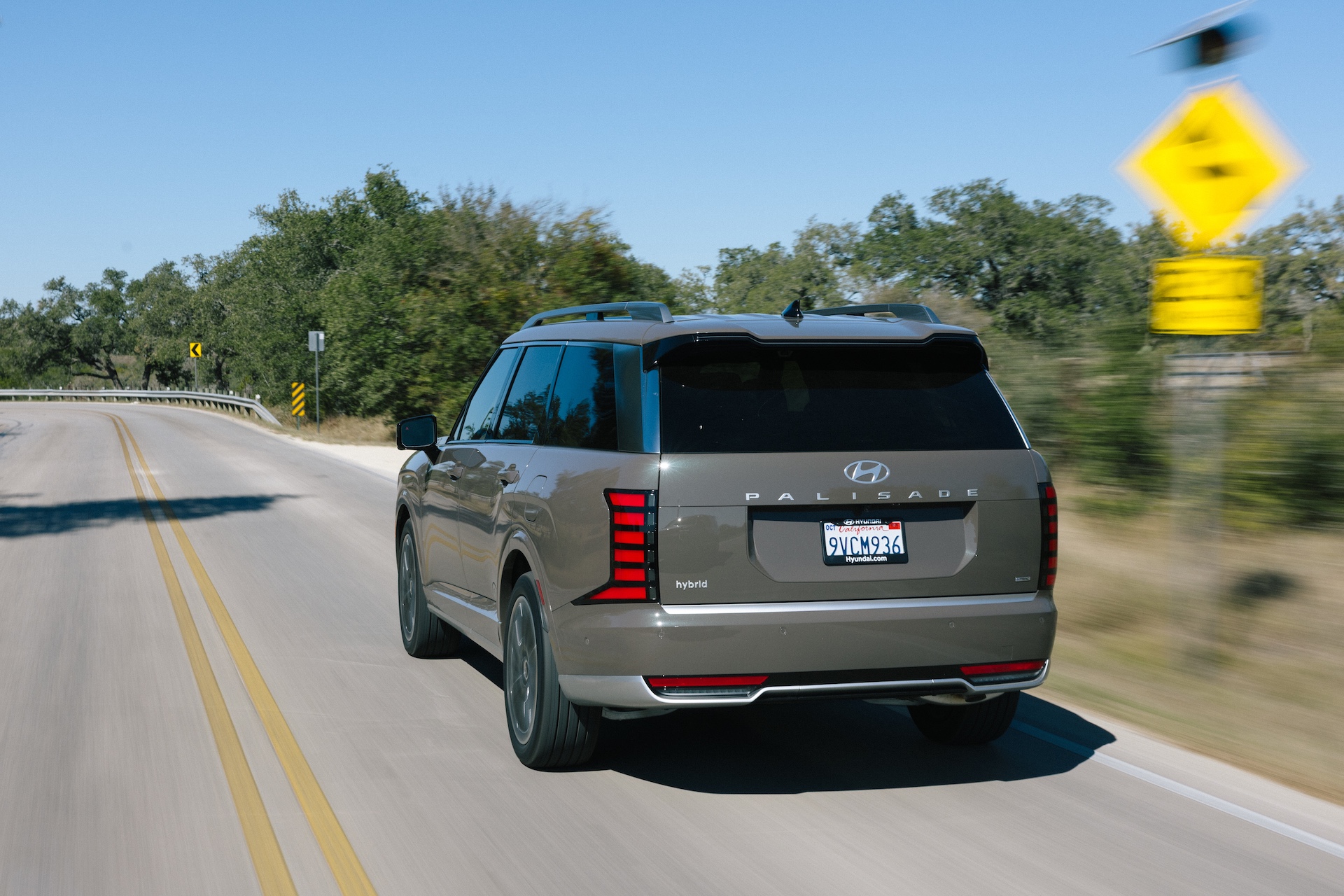
The Palisade Hybrid has a jaunty, flashy swagger that bristles with absolute styling confidence, not the fake stuff of dummy air intakes and bull-bar bite guards. The Schick vibes from the electric-razor front end, the hamburger-stacked LED headlights, the metallic rear roof pillars, and the roof rails grab the light and nail this outline. It’s substantially more handsome than the first Palisade, and that’s a feat. A shorter front overhang, big 21-inch wheels at the top of the lineup, and an angled rear roof pillar bring the body into sharp focus.
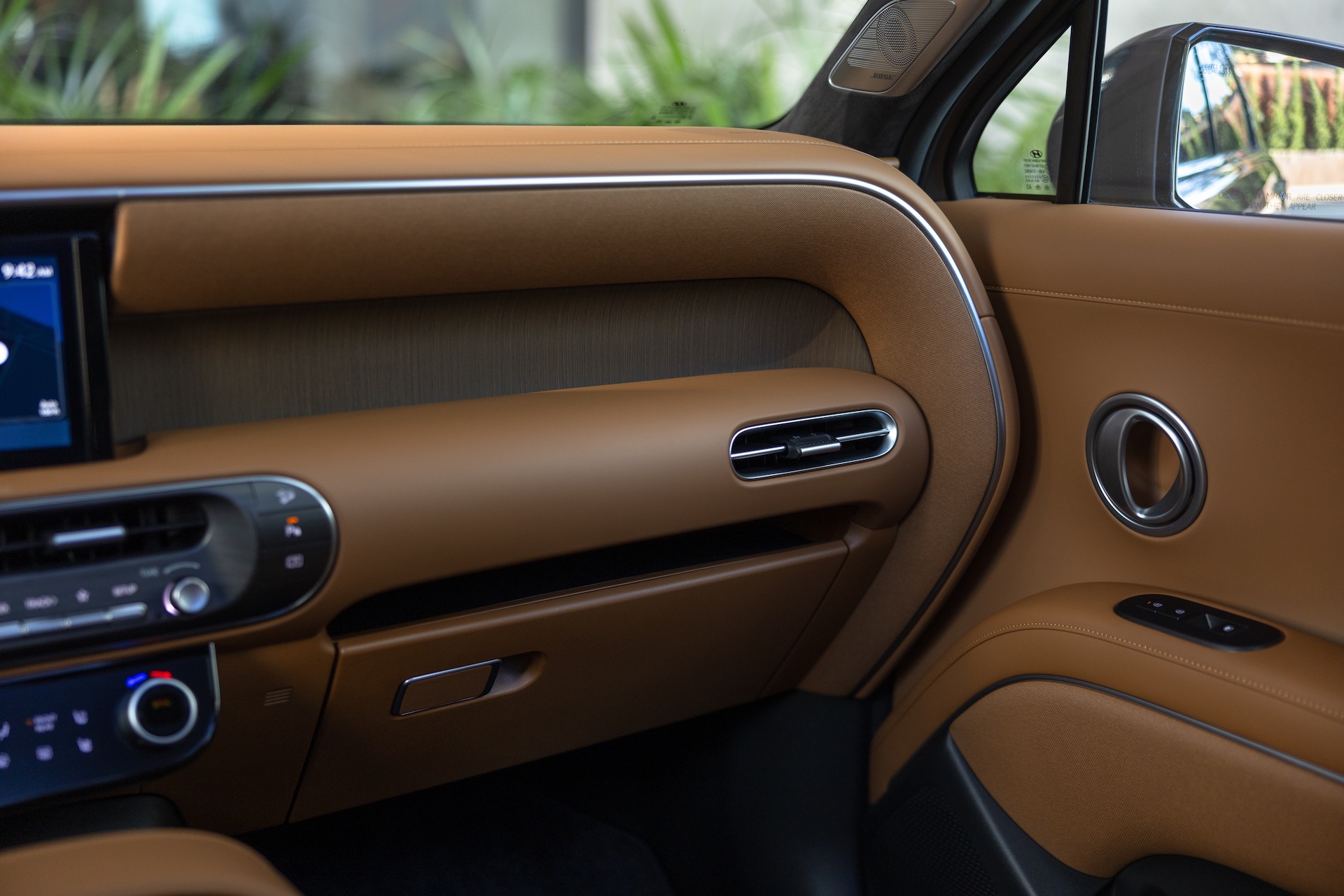
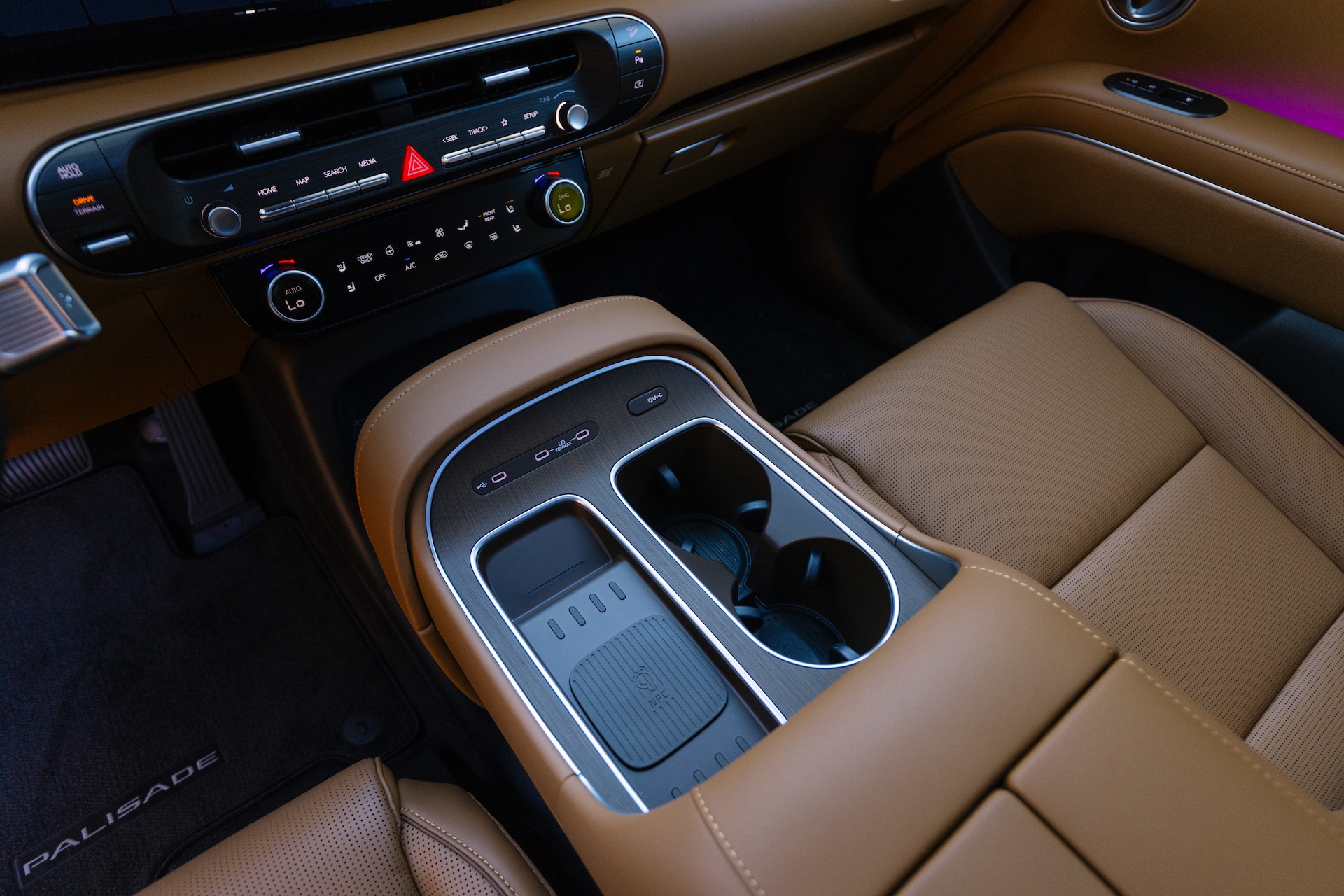
Lesser versions feature a high-grade interior trim that wraps around a great dash layout, complete with low-set displays and clearly organized controls. At the Calligraphy level, the Palisade goes for the knockout punch: mine wore a vertical gray woodgrain trim and fabric-covered panels that all but take Volvo’s lunch money. There are some less expensive plastics on the lower part of the console, but they’re tucked almost entirely out of sight. The lozenge-shaped center console has a charging tray and more of the gray woodgrain; it’s a thing of beauty, really, but I wonder about the placement of the USB-C ports, which stand out on a surface that leaves them vulnerable to spilled drinks and dust. On my test vehicle, a button triggers UV lighting inside the console bin to sterilize small electronics, creating a new-car test I’d never thought of—one that calls for a Petri dish and time.
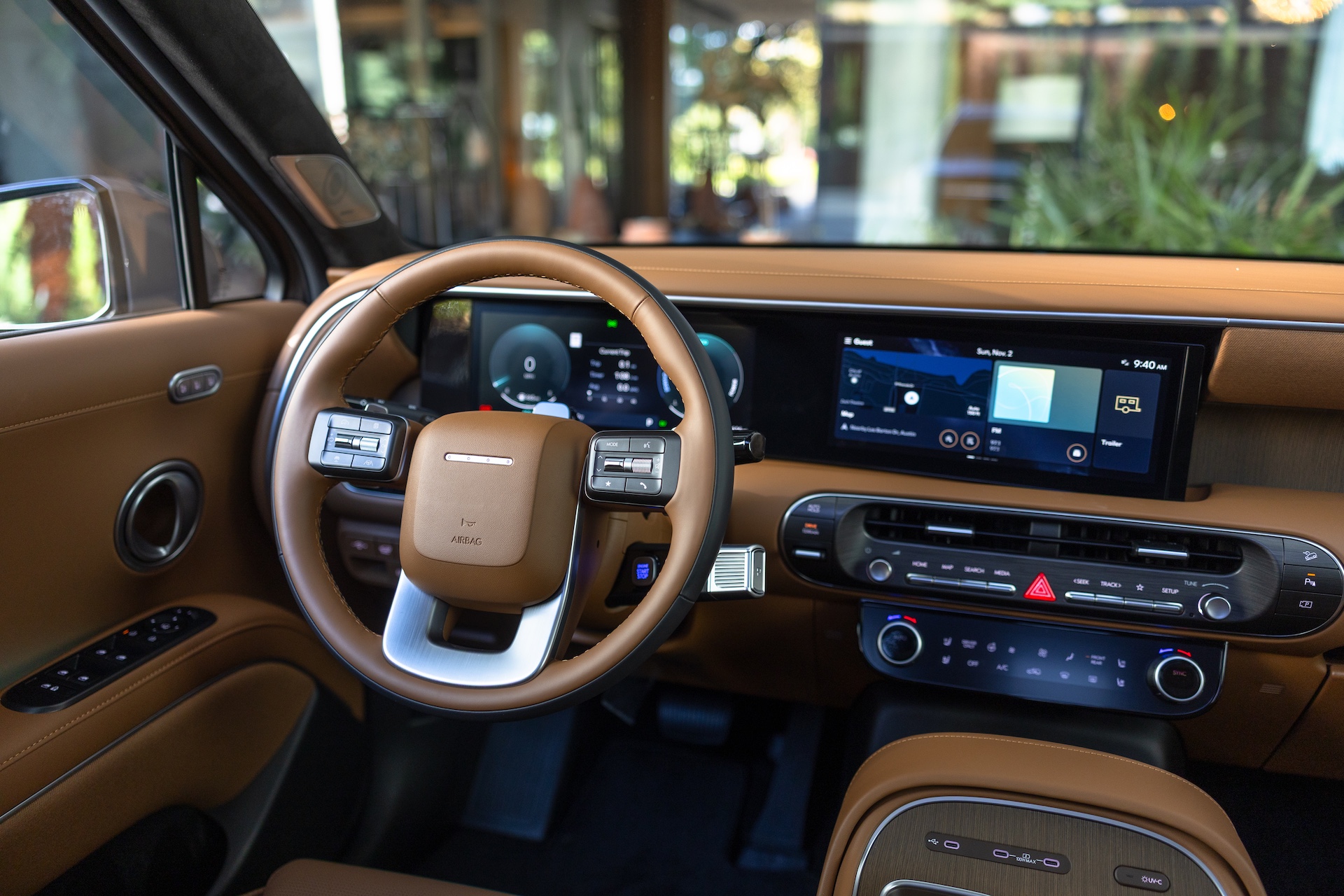
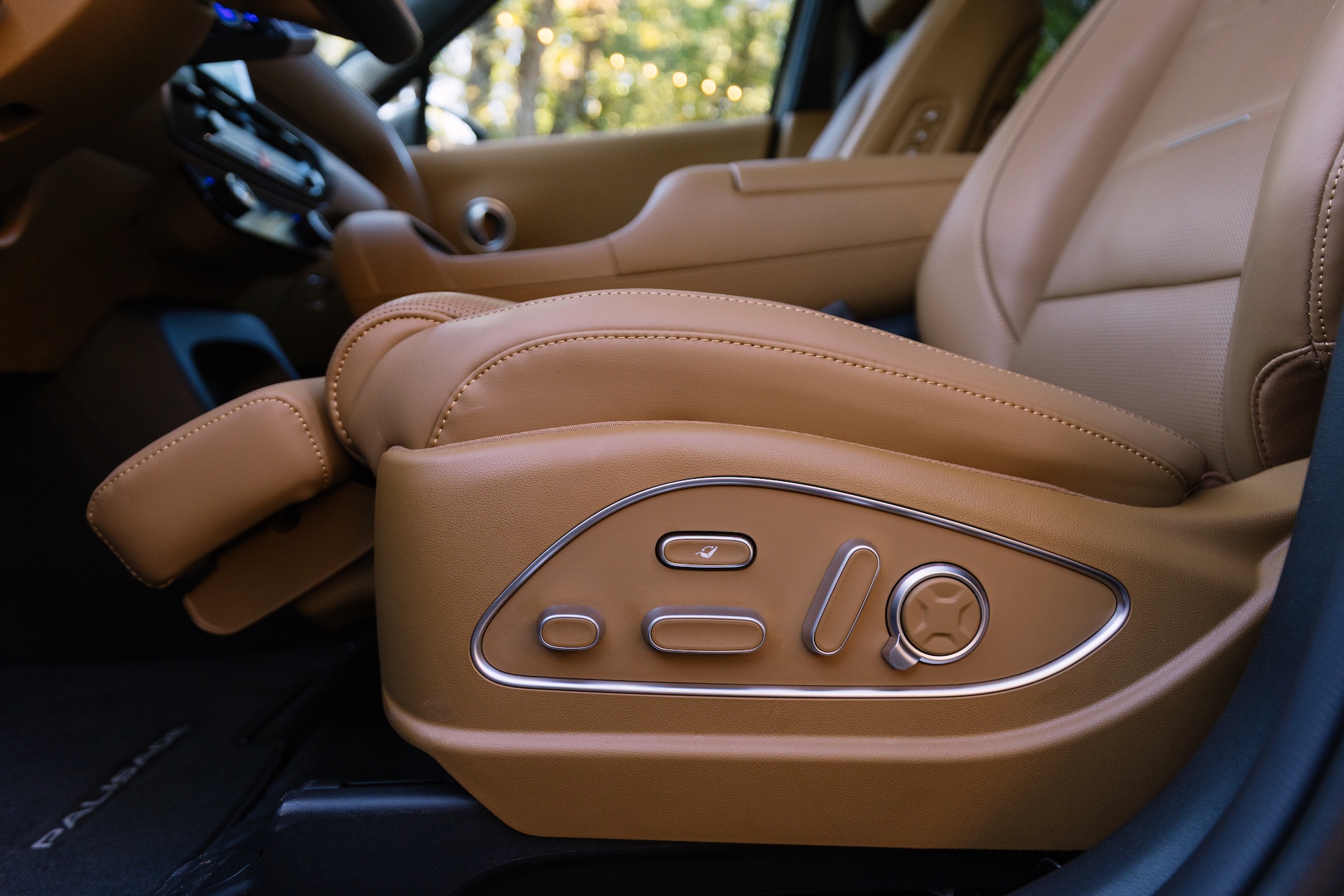
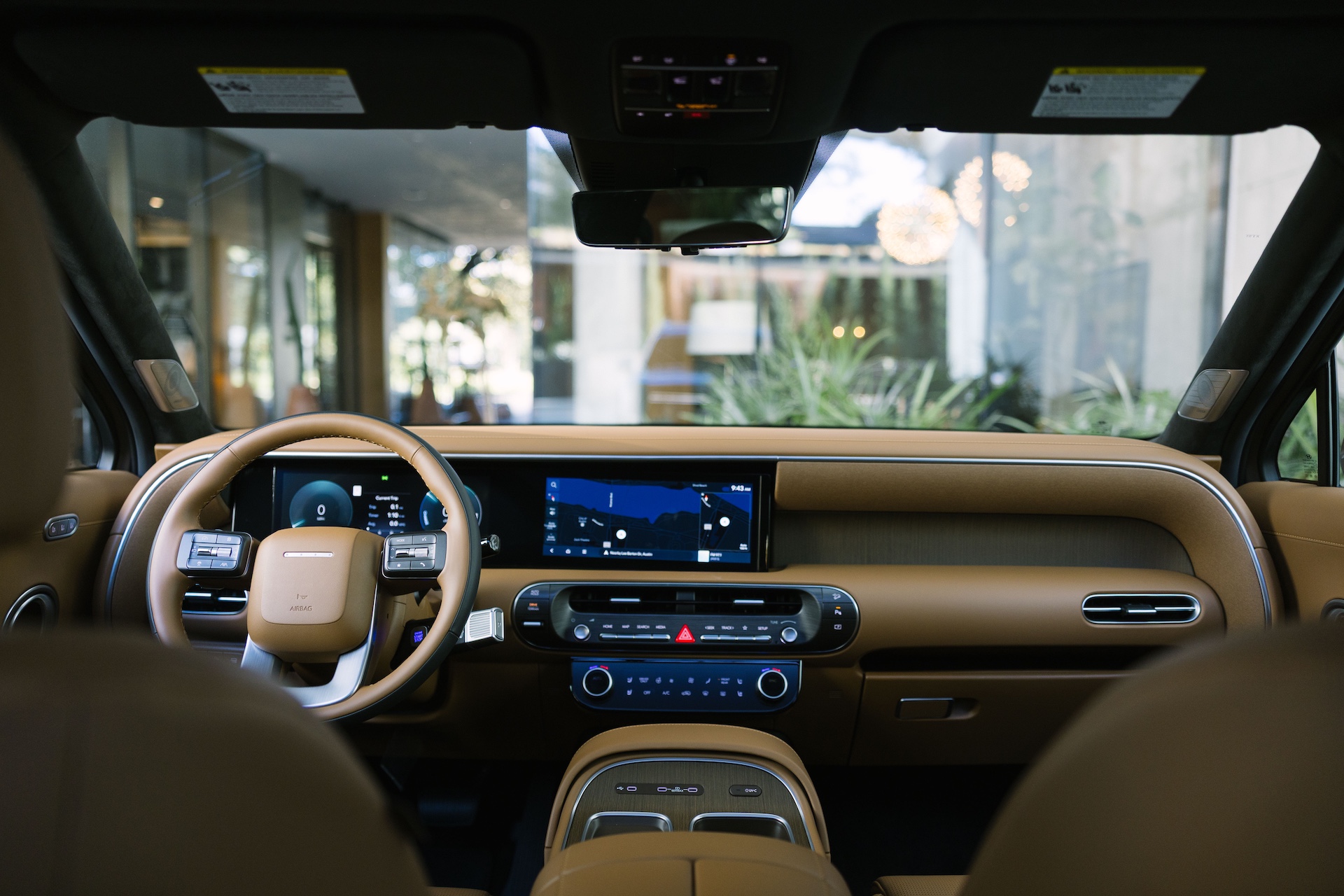
Driver seat comfort is exceptional in this high-end model. The Palisade’s leather seats adjust through a touchscreen interface and conventional controls to boost lumbar support and seat angle. As with Hyundai’s EVs, the Palisade Hybrid’s steering wheel position requires a compromise for me: I can’t put it as low as I’d like, because it would block the tops of the gauges.
Thanks to an additional 2.5 inches of body length and 2.7 inches of wheelbase (it’s now 199.4 inches long in Calligraphy spec, with a 116.9-inch wheelbase), the Palisade Hybrid prioritizes its interior room for the rear rows. Here, the second-row captain’s chairs have USB-C ports nearby, and a pass-through to the third-row seat; SEL editions swap these for a three-person bench. The bucket configuration offers great seat comfort, power adjustment, heating, and cooling—and its range of motion creates a genuinely usable third-row seat for six-footers. I crawled in back, behind front and middle-row buckets set for my height, and had lots of head and knee room, albeit with a knees-up seating position. Medium-sized passengers will think this is a pretty nice place to be, and they probably won’t have to crawl back out through the front seats after leaving the child safety locks activated on the rear doors. I made my way out in a Starbucks parking lot, without any grace, if you really must know.
Driving Experience
The Palisade Hybrid does that nifty luxury car trick of elevating ordinary running gear to the sublime. Here, it accomplishes a lot of that with a softly tuned strut and multi-link suspension, and electric steering and braking to match. Nothing here gets too eager or too upset, even when it’s dialed into Sport mode. With 21-inch wheels and all-season tires, without any kind of adaptive damping, the Palisade Hybrid steamrolled over bumps like a Chevy Tahoe, and that’s no faint praise.
The calling card, of course, is its new hybrid powertrain, which helps it avoid guzzling fuel like a Tahoe on spring break. Hyundai has evolved its hybrid thinking, upgrading to a twin-motor design that pairs a smaller starter-generator motor with a bigger drive motor to a 2.5-liter turbo-4 engine and a six-speed automatic.
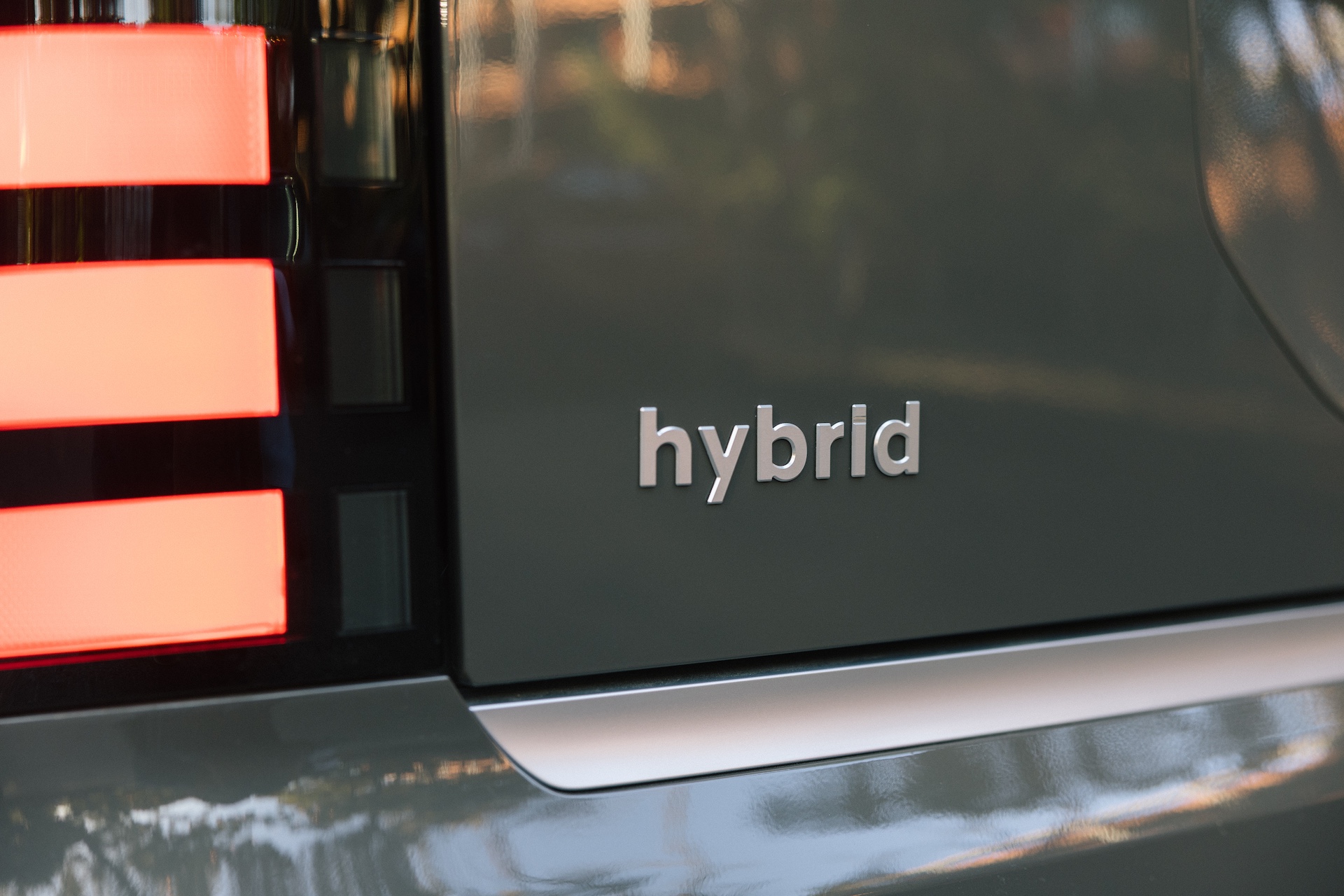
With a net 329 horsepower and 339 pound-feet of torque, the Palisade Hybrid taps into its hardware array and 1.65-kWh lithium-ion battery pack for smooth launches, solid if not spectacular acceleration, and even a silent EV mode that allows it to run accessories off the battery long after the car has been turned off. I mainly drove in Sport mode here, too, which once triggered a recharge mode that sends engine power to the wheels and the battery to top it off; when in regenerative-braking mode, the larger motor reverses to fill up the pack for more gas-electric driving. In all, it’s a much smoother setup than Hyundai’s jerky first-gen hybrids—and during my 80-mile round-trip of Austin, the Palisade Hybrid showed 28.7 mpg on its dash. That’s an excellent figure for a three-row SUV that weighs nearly 5,000 pounds. The Calligraphy garners an EPA rating of 29 mpg combined, but base models score as high as 34 mpg combined.
With all-wheel drive, the Palisade Hybrid adds mud, sand, and snow drive modes. All models tap the powertrain to smooth out corners and bumps by applying torque inside wheels in a corner or after a bump has been crossed. If I had a Palisade Hybrid with this lush interior, there’s no way I’d take it anywhere near dirt. Hyundai sort of gets this, and confirms its tow rating of 4,000 pounds mostly will come in handy when the hitch receiver (hidden behind a removable trim piece) gets plugged in with a bike carrier.
The Palisade Hybrid’s interior stands out for what’s not in it, too: noise. It’s one of the few cars that I’ve been in recently that damps out so much of the outside world that it’s possible to conduct a semi-quiet conversation. Still, it offers microphones for second- and third-row passengers so those in the front seat can talk to them without having to shout.
2026 Hyundai Palisade Features, Options, and Competition
Palisade Hybrids come in four trim levels: SEL, SEL Premium, Limited, and Calligraphy. Each carries a $1,600 destination charge, and can be upgraded to all-wheel drive for $2,000. Every Palisade Hybrid comes standard with automatic emergency braking, lane-keeping assistance, automatic high beams, blind-spot monitors, parking sensors, and adaptive cruise control.
The $45,760 Palisade Hybrid SEL has second-row captain’s chairs, heated front seats, wireless 15-watt smartphone charging, 18-inch wheels, and a hands-free power tailgate. A $49,120 SEL Premium edition adds a power sunroof, a power front passenger seat, a surround-view camera system, and heated and cooled first- and second-row seats. Either SEL can be configured with a no-cost second-row bench seat.
The $53,590 Limited gets 20-inch wheels, leather upholstery, a power-folding and heated third-row seat, Bose 14-speaker audio, and acoustic second-row glass.
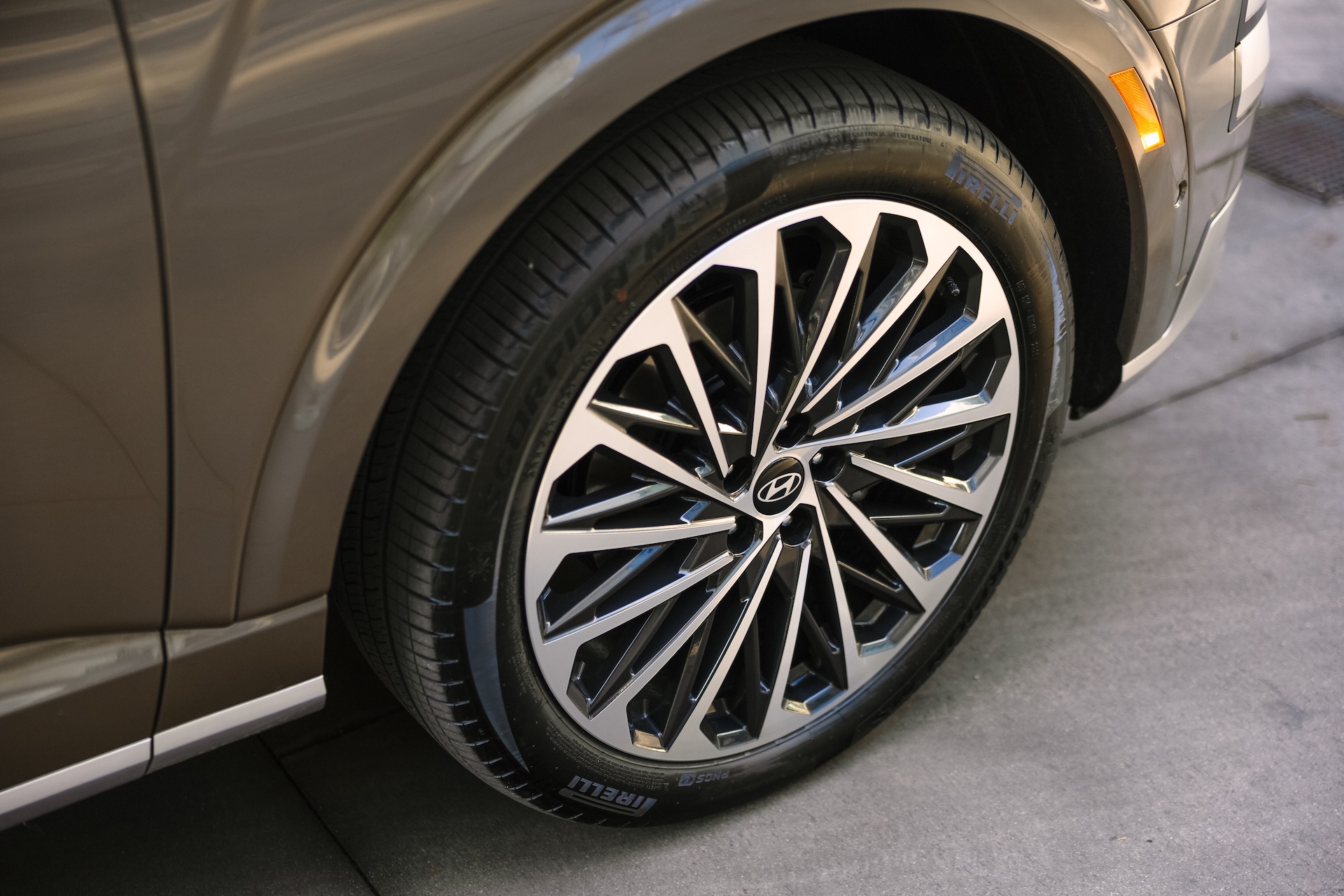
The $58,380 Calligraphy slips into Nappa leather, gets 21-inch wheels and body-color cladding, remote automatic park assist, a rearview camera mirror, the UV-sterilizing console, and massage modes for the front two rows of seats. It also adopts a head-up display, along with blind-spot cameras and a dash cam that can hold up to four days of footage on a 64GB memory card. My test vehicle had all-wheel drive and carpeted floor mats—an upcharge on a flagship model?—and ran $60,625.
At those prices, rivals for the Palisade Hybrid include the Toyota Grand Highlander Hybrid and Lexus TX, the electric Kia EV9 and Hyundai Ioniq 9, and of course, the Kia Telluride, which will also be redesigned completely very soon.
The Early Verdict
A beautifully styled and finished full-size SUV with its most efficient powertrain yet, the Palisade Hybrid’s an instant leader in its pack. For its price, it does a convincing job of delivering Genesis-grade luxury with slightly more rugged intentions for large families. It does so with a quiet confidence that speaks of a car far more mature than the six years it’s been on the road. Some rivals should examine this sophistication and completeness and return to the drawing boards.
Hyundai provided The Drive with travel, accommodations, and access to the vehicle for the purpose of writing this review.
| 2026 Hyundai Palisade Hybrid Specs | |
|---|---|
| Base Price (Calligraphy as tested) | $58,380 ($60,625) |
| Powertrain | 2.5-liter turbo inline-4 | 6-speed automatic | all-wheel drive |
| Horsepower | 329 |
| Torque | 339 lb-ft |
| Seating Capacity | Up to 8 |
| Curb Weight | 4,795 pounds |
| Towing Capacity | 4,000 pounds |
| Cargo Volume | 19.1 cubic feet behind third row | 46.3 cubic feet behind second row | 86.7 cubic feet behind first row |
| Ground Clearance | 7.4 inches |
| EPA Fuel Economy | 29 mpg city | 30 highway | 29 combined |
| Score | 9/10 |

Quick Take
Mature beyond its years, the 2026 Hyundai Palisade Hybrid has efficiency and elegance to spare.
The post 2026 Hyundai Palisade Hybrid First Drive Review: The Luxurious, Efficient SUV That Puts Rivals on Notice appeared first on The Drive.
Posts Widget
- 1

- 2
- 3
- 4



Copyright © 2025 · ORUC GLOBAL · All rights reserved


